The principal British timbers of oak, ash, walnut, elm, and sycamore each have a character distinct enough that choosing between them shapes a piece as much as its design does.
Oak
British oak is the national timber in the way that self-deprecation is a national pastime: so embedded in everyday life that people stop thinking about it. It is everywhere, in floorboards and pub benches and churchyard gates, and this familiarity makes it seem straightforward, which it is not.
Oak can be an argumentative material. It moves with the seasons more than most timbers, expanding and contracting with changes in humidity in ways that have to be designed around rather than ignored. It reacts to iron, leaving blue-black stains where steel hardware comes into contact with wet wood, so attention has to be paid to fixings. It also has a very open grain that, depending on your choice of finish, requires patient sanding and sealing. None of this is a reason to avoid oak, but all of it has to be factored into a design.
The reason for using oak is that it has a quality no other British timber quite replicates: a sense of permanence, of something that has been here a long time and, in all likelihood, will be around a lot longer. The medullary rays that run through quarter-sawn oak catch the light differently from every angle, giving surfaces a depth that always looks extraordinary in person, and is always pleasing coming from the planer. The warm amber patina it develops over years of use is one of the things that makes older pieces even more beautiful than new ones.
Ash
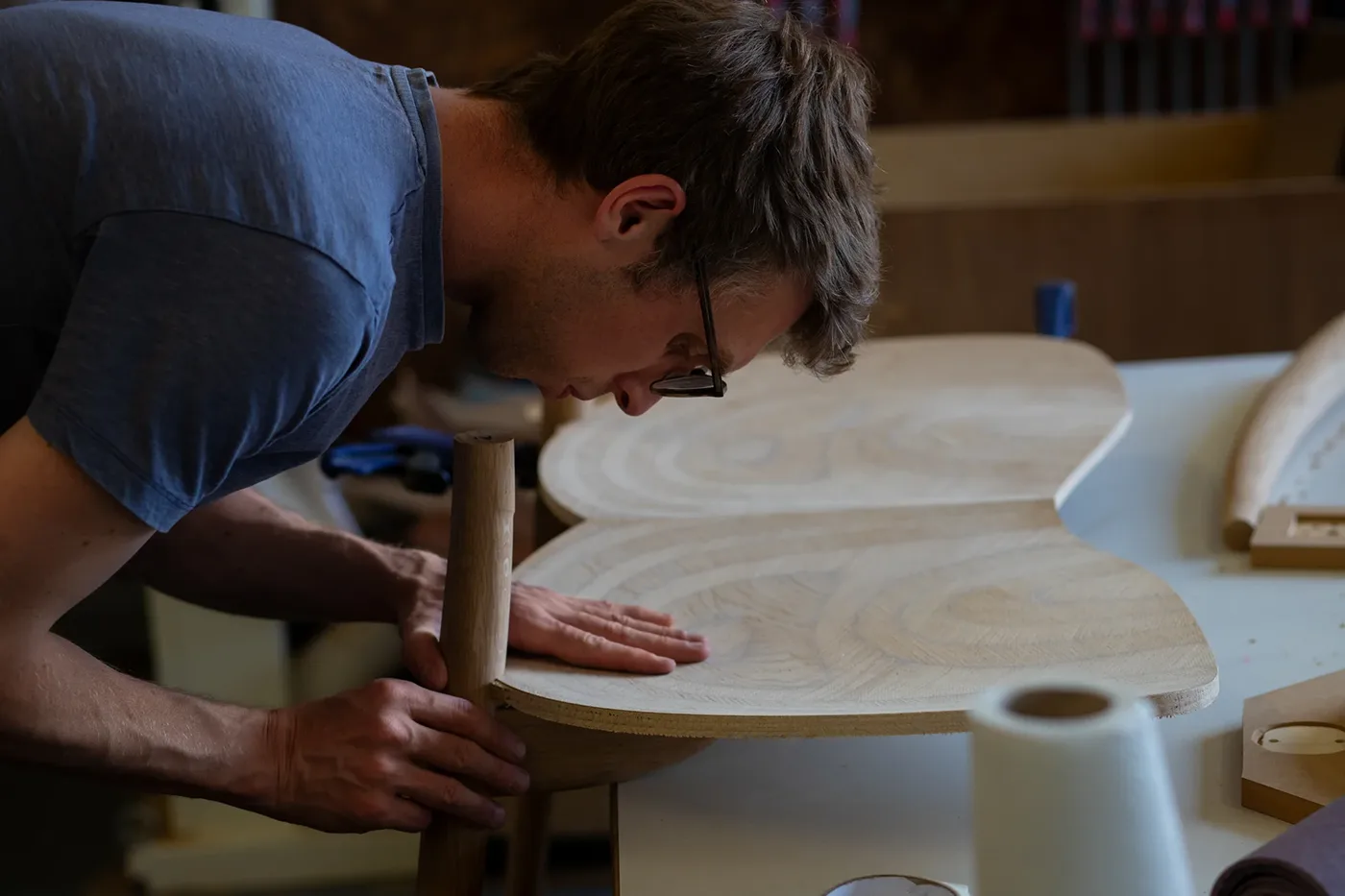
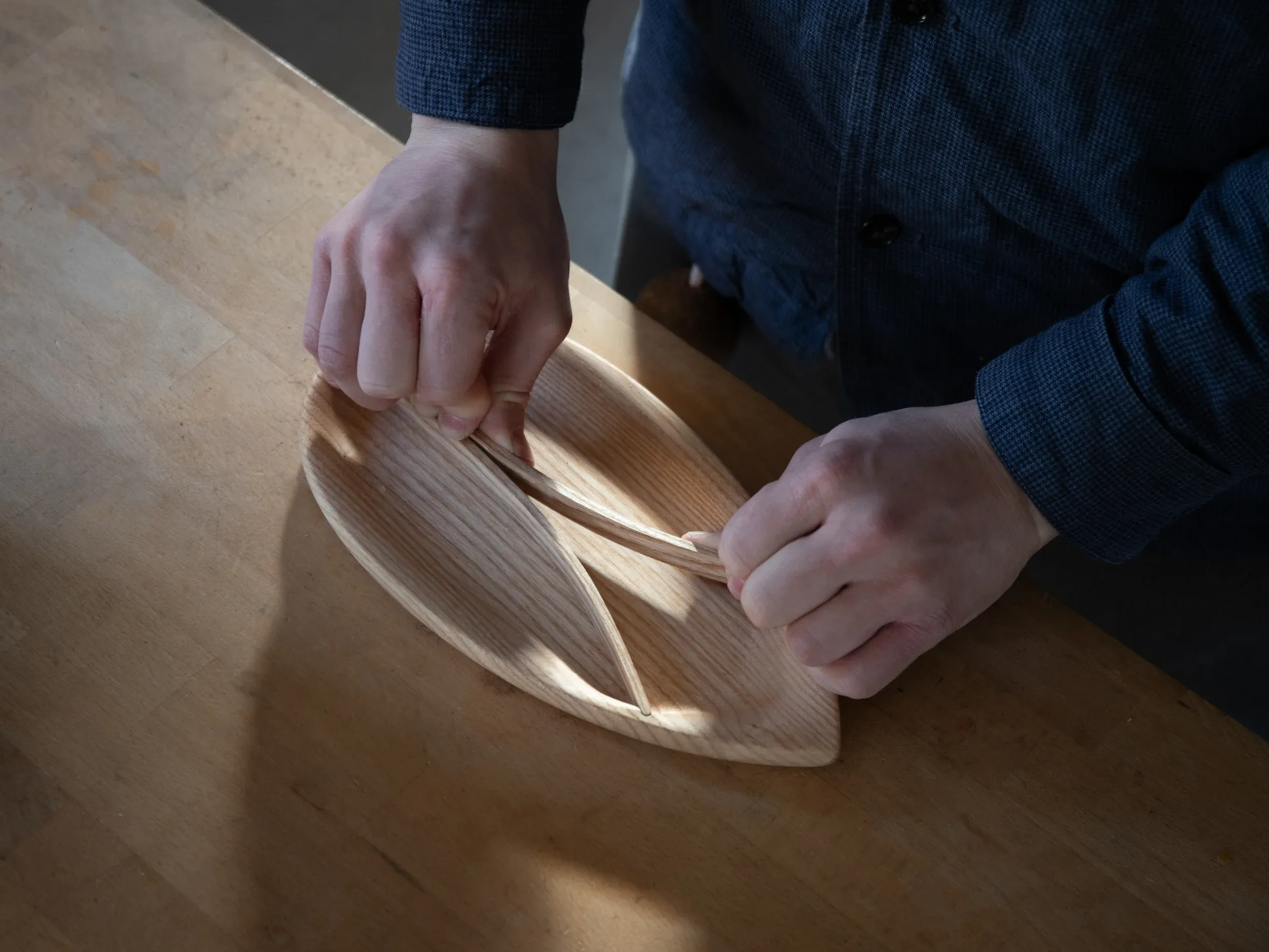
Ash is the most underrated timber in the British workshop, which is curious given how long it has been in use. Tool, brush, and broom handles have always been made from it, because it absorbs shock better than any other native British timber. The Vikings built longboats from it, and its steam-bending qualities lent it to use in the curved backs of Windsor chairs. What ash offers in furniture is a combination of strength and lightness that is genuinely unusual, with a paler grain that reads as contemporary in a way oak does not always manage. This pale version of the timber can also sometimes give way to a wilder, deeper grain colour, sometimes referred to as olive ash, which can be spectacular.
Walnut
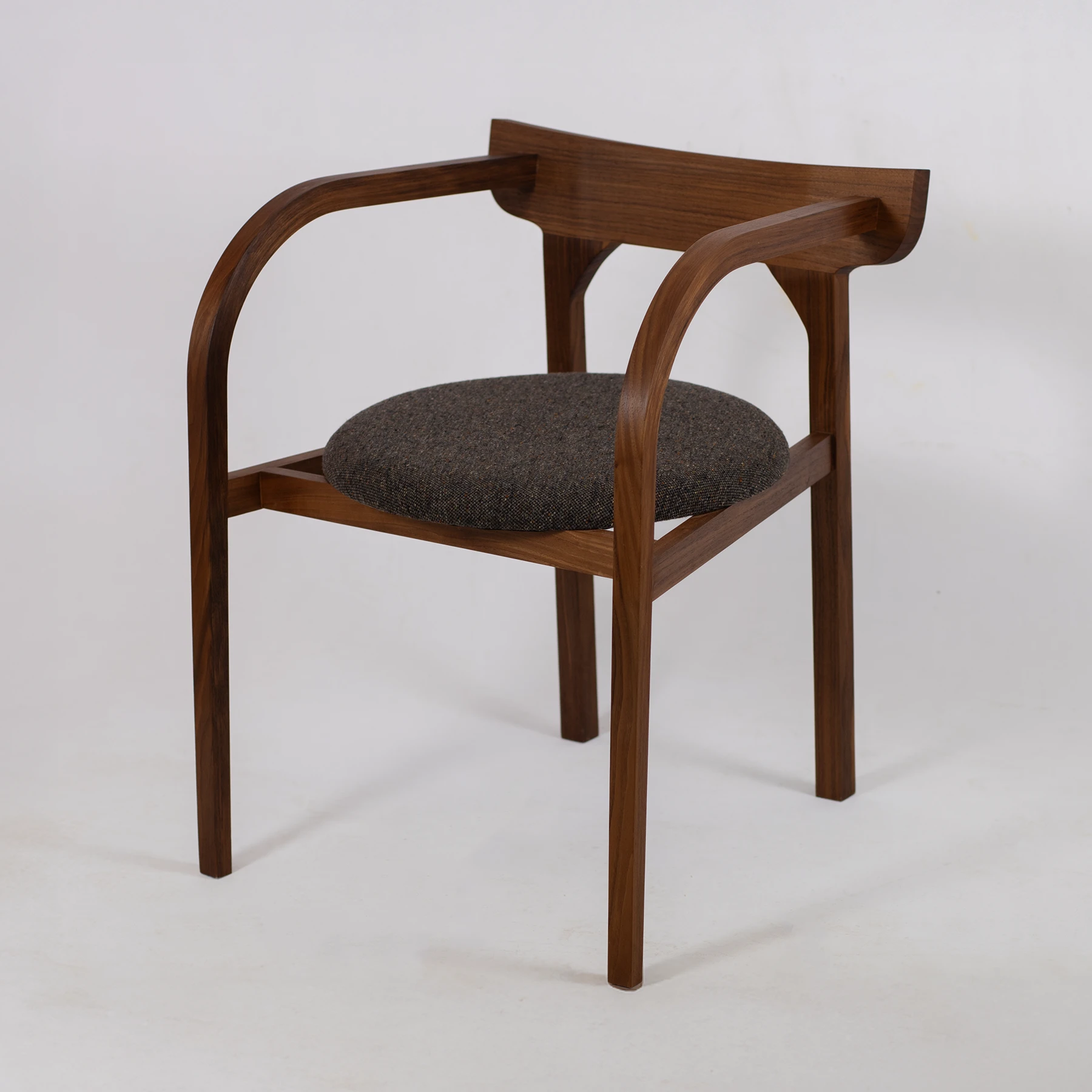
Walnut in the right context can be extraordinary. It is dark, rich, and expensive, and these qualities make it appealing in the abstract, but it has to be used with care in a design.
The grain ranges from fine and barely visible to wildly figured depending on where in the tree the boards come from. Walnut burrs have an intensity that requires caution, but used in framed panels or delicate boxes can give a piece an air of refined luxury. British walnut tends to have more character in the grain than the American walnut that dominates commercial furniture, and rather more unpredictability, which is part of what makes working with it interesting.
Walnut takes oiled finishes beautifully, revealing a depth to the timber that is always a revelatory pleasure to apply in the workshop. This is also the point that can reveal any imperfections in the sanding, as walnut's very fine grain requires an absolute perfection in the surface.
Elm
The devastation of Dutch elm disease has made elm much harder to source than it once was; most British elm of any great size now comes from Scotland. The disease affects the trees when they reach sexual maturity and give off a pheromone that attracts the beetle, so thin sections of hedgerow elm can also be used in projects. Elm's grain is interlocked in a way that makes it very difficult to split, which historically made it the standard timber for wheel hubs, chair seats, and coffin boards, wherever strength in every direction was what mattered.
The figure in elm is unique and impossible to predict: the grain swirls in patterns that cannot be replicated, which means every piece made in it is genuinely unrepeatable. When notable elm boards are spotted at timber yards, they often get brought back to the workshop to sit in the timber stack, waiting until the right piece comes along.
Sycamore
Sycamore is pale, almost white, with a fine even grain. It tends to appear in furniture as a secondary material: drawer linings, interior surfaces, components that are present but not noticed, and this is understandable given how unremarkable it looks in plain-sawn form.
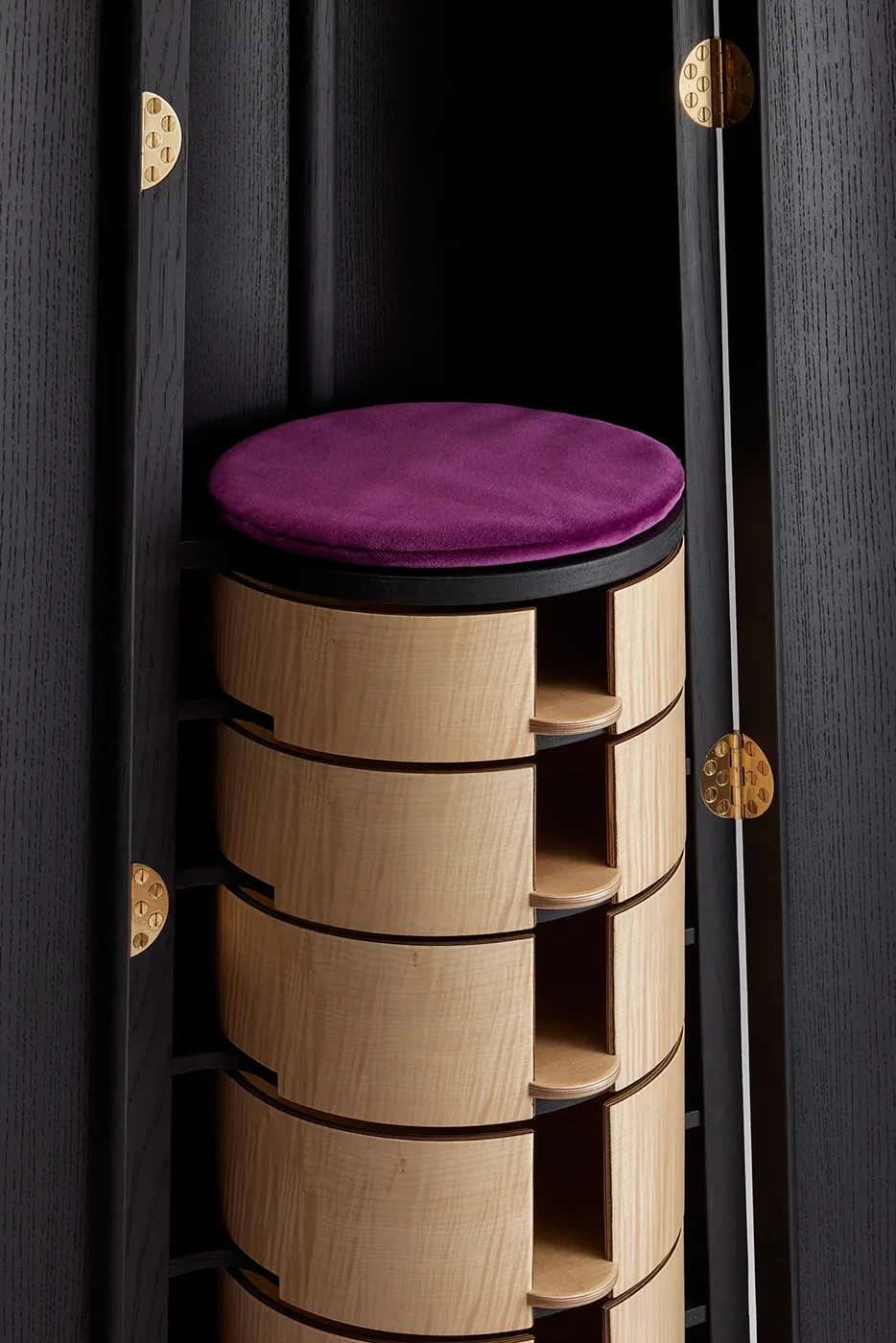
Quarter-sawn, though, sycamore produces a ripple figure that runs across the grain like a reflection on water, and rippled sycamore is one of the most beautiful British timbers. It appears in historical instrument making and high-quality cabinet interiors for good reason, taking a fine finish better than most timbers and polishing to a surface that is almost translucent. It also provides a deliberate contrast when placed alongside darker species, something used to considerable effect in the Obelisk 3 cabinet, where the pale, shimmering interior works precisely because of its difference from the blackened oak outside.
A Note on Sourcing
Every timber choice carries the question of where it came from, and the answer matters practically as well as ethically. Locally sourced British hardwood, often air-dried over several years, has already acclimatised to the conditions it will spend its life in and tends to behave more predictably in a finished piece as a result. This is not a universal argument for local over imported, since some timbers have no adequate British substitute, but where a British species serves the purpose well, the material tells a story. Read more about how we approach timber sourcing at the studio.