Ash is the third most common tree in British woodland, after oak and birch. Before the current epidemic, it covered around 12 to 13% of Britain's broadleaf woodland canopy. The Forestry Commission estimated in 2013 that approximately 126 million ash trees grew in British woodland; the Tree Council's 2015 survey added another 60 million in hedgerows, urban settings, and non-woodland environments. Something in the order of 186 million ash trees, in other words, across the British landscape.
The tree is distinctive enough in its ecology that no other single species can replace it. The Joint Nature Conservation Committee identified 953 species in Britain as associated with ash: 12 birds, 28 mammals, 58 bryophytes, 68 fungi, 239 invertebrates, and 548 lichens. Of those, 44 are obligate species, entirely dependent on ash for some part of their life cycle. Ash also has a particular structural quality that shapes the communities it supports: its compound leaves and open-branched crown allow exceptional light penetration to the woodland floor, supporting ground flora, including bluebells, wild garlic, and dog's mercury, that cannot survive under a denser canopy. Oak hosts the widest range of former ash-associates but only around 69% of them. There is no straightforward substitute.
The Disease and How It Arrived
The pathogen responsible for ash dieback is Hymenoscyphus fraxineus, an ascomycete fungus originally from eastern Asia. In its native range, it lives as a benign leaf litter decomposer on Manchurian and Chinese ash, causing mild foliar symptoms because its host trees have co-evolved with it over millennia. European ash has no such history; introduced to a novel pathogen, its immune response is entirely inadequate.
The disease was first recorded killing trees in large numbers in Poland in the early 1990s. By 2003 it had reached Denmark and Sweden. It spread west through Germany, Austria, France, and the Low Countries over the following decade, then arrived in Britain in February 2012 in a consignment of infected ash plants imported from the Netherlands to a nursery in Buckinghamshire. Wild trees were confirmed affected in October 2012, at which point a ban on ash imports was enacted and a national survey launched.
The biosecurity failure that allowed this to happen is documented. Between 2003 and 2011, as ash dieback was causing widespread damage across continental Europe, an estimated five million ash saplings were imported into Britain from affected regions. No import ban existed during this period. The disease had likely been present in Britain from the mid-2000s, years before official confirmation, based on genetic evidence subsequently published in Nature Ecology and Evolution in 2018. That same study identified a further sobering detail: the entire European epidemic was founded by just one or two genetically distinct individuals, an extraordinarily narrow bottleneck for a catastrophe of this scale.
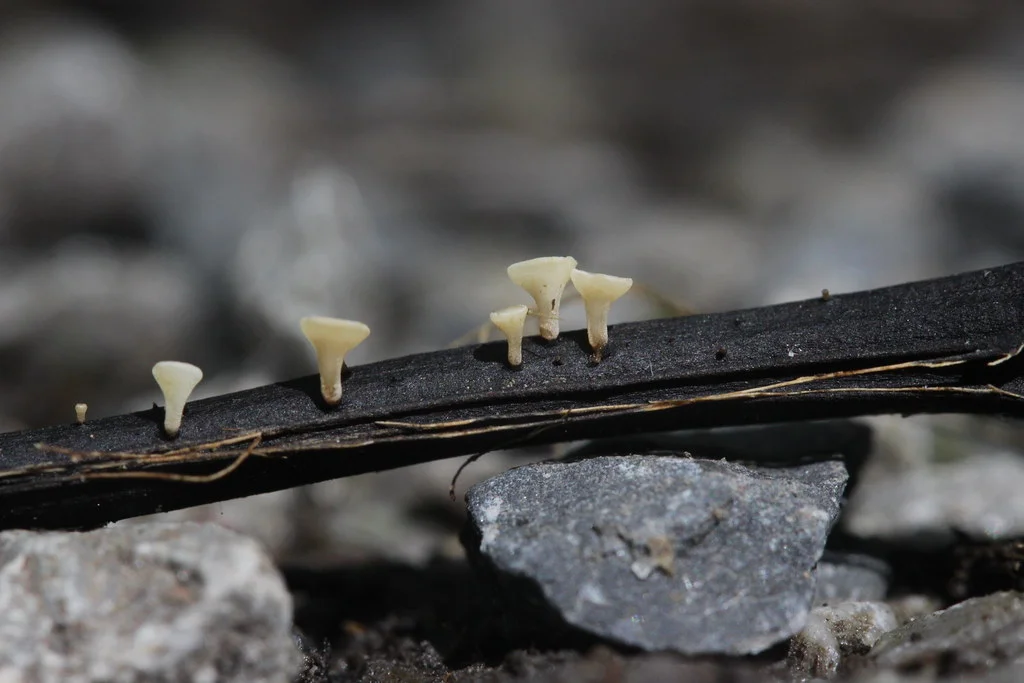
The fungus spreads through airborne ascospores released from fruiting bodies on fallen leaf rachises between June and September. Spores can travel tens of miles on the wind. Infection enters through leaves, colonises the vascular tissue, and progressively kills the crown from the outside inward. Young trees can be killed within a single growing season. Mature trees typically survive several seasons, their larger crowns masking the progressive vascular damage; they eventually reach a stage of near-complete crown loss and structural failure.
The Scale of the Problem
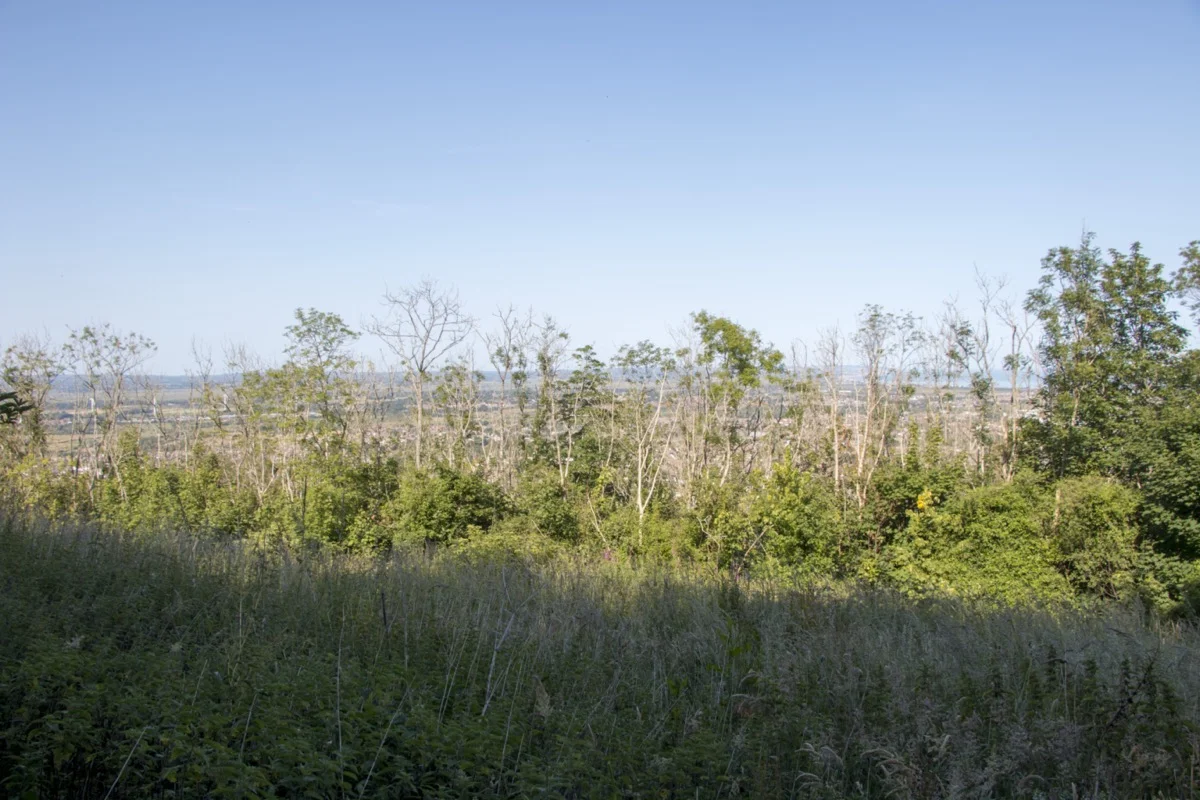
The Woodland Trust estimates that ash dieback will kill up to 80% of the UK's ash trees. An economic assessment published in Current Biology in 2019 put the total cost to Britain at £15 billion, of which £7 billion was projected to fall within a decade. Clean-up costs alone, including felling dangerous roadside trees, accounted for £4.8 billion. That figure is approximately a third higher than the reported cost of the 2001 foot-and-mouth disease outbreak.
The catastrophic 95% mortality rate feared in 2012 has not materialised on that timescale; progression has proved slower and more geographically uneven than initial projections suggested. That is some comfort. The disease is still spreading, however, and the long-term projection remains severe.
Research published in Global Change Biology in August 2025, drawing on woodland survey data collected since the early 1970s, added a further dimension. Dying ash trees are also releasing carbon previously stored in woodland soils: as ash roots die, the carbon they had been continuously pumping into the ground begins to escape. The study estimated a release of approximately 5.8 million tonnes of CO₂ from British woodland soils between 2016 and 2021, equivalent to roughly half the annual carbon removed by all British broadleaf woodland. The combined effect amounts to a triple hit to net-zero targets: the immediate carbon in dying trees, the loss of their ongoing sequestration capacity, and this soil carbon release.
Tolerance, Not Resistance
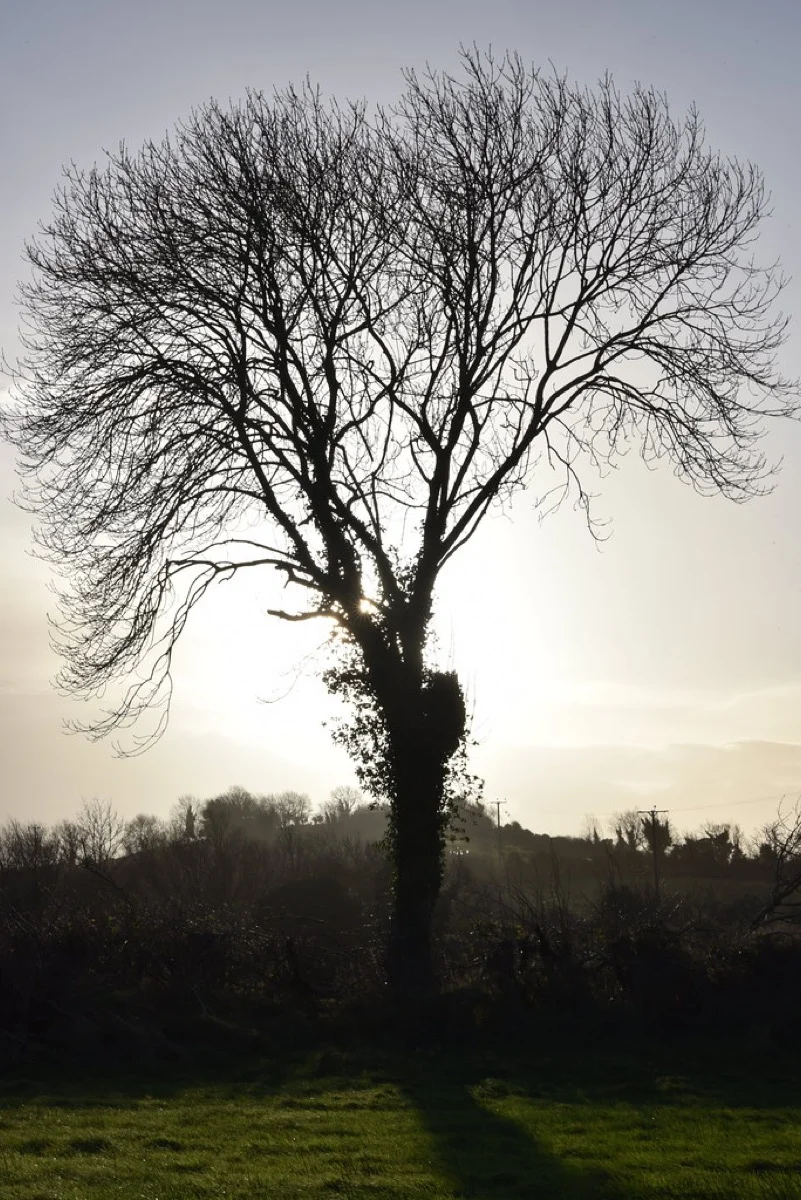
A distinction matters here that public coverage often blurs. Researchers have found no ash trees displaying complete resistance to H. fraxineus: no tree has been identified that prevents infection outright. What has been found, across northern Europe, is a continuous spectrum of susceptibility, with roughly 1 to 5% of trees showing what researchers classify as meaningful tolerance: substantially less crown dieback than the local average under equivalent infection pressure. These trees are not immune; they are, to varying degrees, better able to limit the damage the pathogen causes while continuing to function.
This distinction matters for what the breeding programmes are selecting. They are not looking for trees that will never be infected. They are looking for trees that survive and reproduce despite infection, passing on the genetic variants associated with lower damage to their offspring. The tolerance is polygenic, controlled by many genes each of small effect, which means it evolves more slowly than a single-gene trait would but also more stably and predictably. It cannot be switched on by a single mutation, but it can accumulate gradually across generations through selection.
The Research Response
The most sustained breeding effort in Britain has been the Living Ash Project, a Defra-funded consortium involving Forest Research, Future Trees Trust, Kew, and others, running since 2013. Volunteers and researchers have combed the countryside for ash trees showing lower-than-average dieback under equivalent infection pressure. Candidates are propagated from cuttings, grafted onto rootstock, and planted into a National Archive of Tolerant Ash on the public forest estate in Hampshire, with a second archive established in Clackmannanshire, Scotland. Selection criteria have tightened over successive phases, prioritising trees that have persisted under heavier inoculum pressure. By the project's conclusion, nearly 2,000 tolerant individuals had been preserved across both sites.
Forest Research's controlled inoculation trials produced a striking result: when wood was sampled from trees showing healed lesions, where earlier disease damage had visibly recovered, the pathogen could not be detected. Those trees appeared to be actively suppressing or clearing the infection, though the molecular mechanism is not yet fully understood.
Future Trees Trust focuses on the timber genetics dimension within the same programme, identifying superior trees for replication in progeny trials and clonal seed orchards. The aim is to produce orchard populations combining good timber form with demonstrated disease tolerance, supplying material for both commercial forestry and ecological restoration.
That infrastructure is being extended through the Centre for Forest Protection, run jointly by Kew and Forest Research. A £4 million Defra commitment in May 2025 is funding a new phase of work, including research into speed-breeding technologies for broadleaved trees. Ash's ten-year generation time from seed to first flowering is a practical bottleneck: shortening it would allow selection cycles to run faster and tolerant material to reach planting scale sooner.
Kew's Millennium Seed Bank at Wakehurst collected seed from healthy-appearing ash trees from 2013 as part of the UK National Tree Seed Project, which concluded in 2020 having banked 13 million seeds from over 70 native British tree and shrub species. These seed stores provide insurance against population collapse and material for future restoration work.
What the Trees Are Already Doing
The most significant recent development came from a study published in Science in June 2025 by researchers at the Royal Botanic Gardens, Kew and Queen Mary University of London.
The study took place at Marden Park Wood in Surrey, a Woodland Trust site, where researchers collected DNA samples from hundreds of adult ash trees established before the epidemic arrived and from the next generation of young trees now growing in the same woodland. Comparing the genetics of the two generations, they found that thousands of genetic variants associated with lower susceptibility to ash dieback had become more common in the younger generation. Statistical analysis confirmed that this shift was driven by natural selection, not genetic drift or chance. The team estimates that natural selection has already eliminated 31% of the least tolerant juvenile trees in a single generation.
The study is described by its authors as among the clearest real-time evidence for polygenic evolution ever recorded in the wild. The theoretical framework it confirms, that selection can act simultaneously on many variants of small effect to shift a population's characteristics over a single generation, was first developed over a century ago but had rarely been demonstrated directly in a wild plant population under field conditions. The ash epidemic, catastrophic as it is, has provided a natural experiment of unusual clarity.
This should not be read as meaning the problem is solving itself. The researchers are careful on this point. Natural selection alone may be insufficient if the genetic variation in remaining ash populations is too narrow: as trees become scarcer and populations more fragmented, the rate of selection could slow. The study's practical implication, as the authors note, is that human-directed programmes can accelerate the process that nature has already begun. Genomic prediction tools developed at Kew can identify tolerant individuals with over 90% accuracy from a sample of 200 genetic markers, meaning the breeding programme can move far faster than traditional field observation over multiple seasons would allow.
Earlier work by the same team, published in Nature Ecology and Evolution in 2019, had already mapped thousands of genetic variants associated with lower susceptibility, many of the most significant located in or near genes with known roles in pathogen defence in other plant species. That work confirmed the polygenic architecture of tolerance. The 2025 Science paper confirms that this architecture is being acted on by selection in the wild, right now, in British woodland.
What Comes After
There is still much to be lost. The disease is widespread, the projected mortality figures are severe, and the ecological consequences will be felt across British woodland for decades as ash populations decline and the species communities they support are forced to adapt or contract. No amount of research changes the immediate trajectory of a disease that is already established across the country.
In habitats where ash loss has been most severe, ecological replacement work is already under way. The LIFE in the Ravines project, a £5 million collaboration between Natural England, the National Trust, and the Derbyshire and Staffordshire Wildlife Trusts, reached 84,000 trees planted across Peak District ravine woodland in July 2025. By 2020, an estimated 99% of the Dales' ash trees were infected; the project is replanting the most severely damaged sites with native alternatives, principally small-leaved lime, large-leaved lime, and wych elm, across some 170 hectares representing 16% of all ravine woodland in Britain, a European Priority Habitat. It is not a like-for-like substitution: the dependent species assemblage that ash supports cannot simply transfer to a different host. It is, rather, an attempt to preserve canopy structure and woodland function while the composition of these sites adjusts to an ash-depleted landscape.
What the research does change is the longer view. The trees that survive the epidemic are not survivors by chance: they carry a higher frequency of the genetic variants associated with tolerance, and those variants will propagate into the next generation. The national archives in Hampshire and Clackmannanshire, and the seed stores at Wakehurst, preserve the best of this material under controlled conditions. Future Trees Trust's seed orchards are being managed to combine tolerance with the timber properties, form and growth rate, that will make ash economically viable as a forestry species once the epidemic has run its course.
Ash is not finished. What is happening in Marden Park Wood, and in woodlands across Britain, is among the most extraordinary examples of natural adaptation under human observation: a tree species, under unprecedented pressure from a novel pathogen, already rebuilding its population's defences within a single generation. The task for everyone involved in the research and conservation programmes is to accelerate and protect that process while there is enough genetic variation remaining in wild populations to work with.
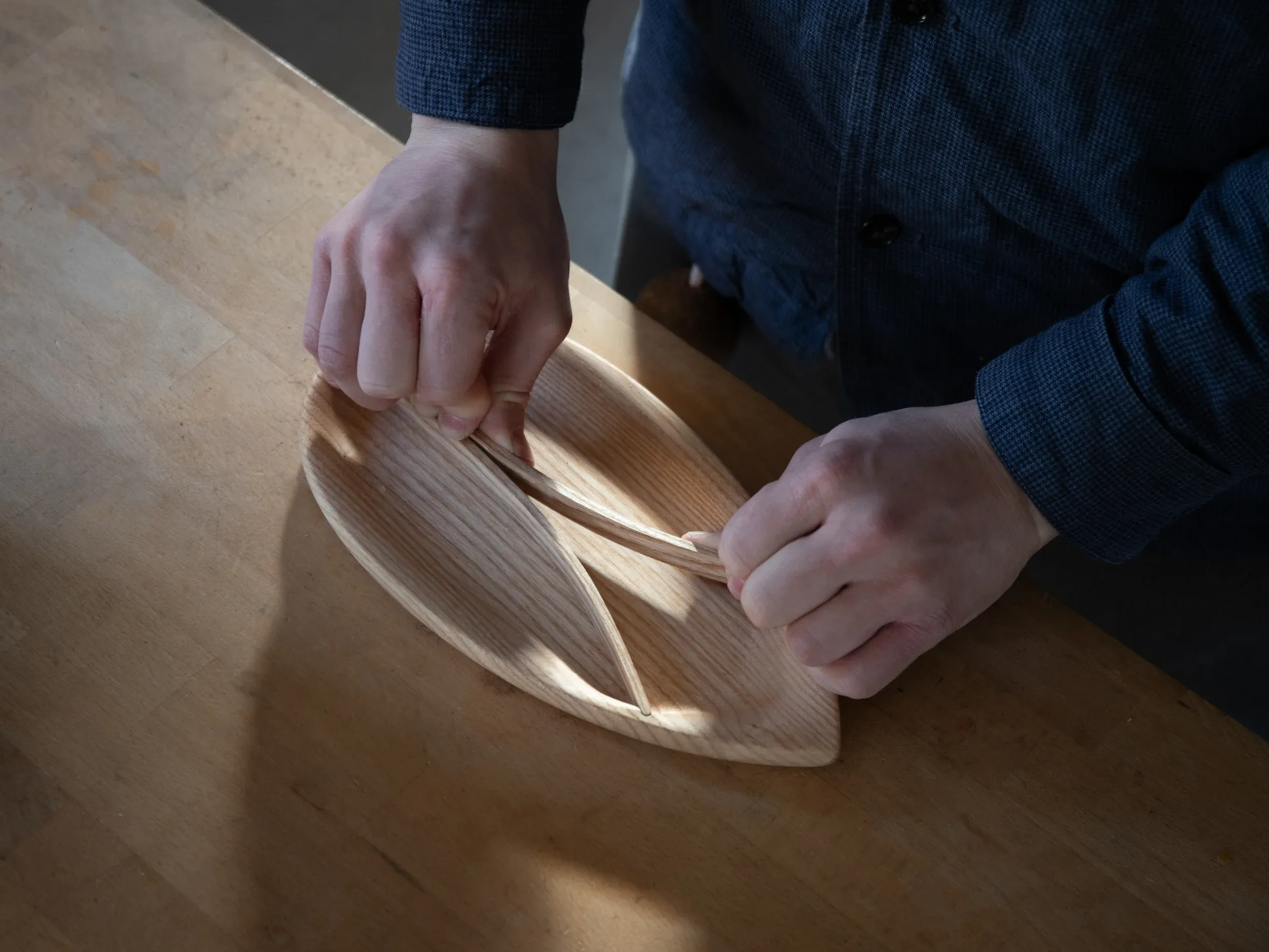
For those of us who work with ash, the story runs close to home. We use it for steam-bent work because no other common British timber has quite its combination of long grain, flexibility, and resilience; these are the same qualities that made it the timber of wheel rims, longbow staves, and hurley handles for centuries. Whether it remains available at scale in British forestry over the next generation depends on how well the breeding and conservation programmes work, and how much wild genetic variation survives the epidemic in the meantime.
Sources and further reading
- Rapid polygenic adaptation in a wild population of ash trees under a novel fungal epidemic. Metheringham, Buggs, Nichols et al., Science, June 2025
- Genomic basis of European ash tree resistance to ash dieback fungus. Stocks, Metheringham, Kelly et al., Nature Ecology and Evolution, 2019
- The £15 billion cost of ash dieback in Britain. Hill et al., Current Biology, 2019
- The ash dieback invasion of Europe was founded by two genetically divergent individuals. Nature Ecology and Evolution, 2018
- Ash dieback (Hymenoscyphus fraxineus). Forest Research
- Living Ash Project: ten years on. Living Ash Project, May 2024
- Living Ash Project. Future Trees Trust
- Can evolution save ash trees from dieback? Royal Botanic Gardens, Kew
- Accelerating ash breeding programmes. Royal Botanic Gardens, Kew
- Ash dieback: a triple whammy for net-zero plans. UK Centre for Ecology and Hydrology, August 2025
- Peak District ravine woodlands restored with 84,000 trees. GOV.UK, July 2025
- Centre for Forest Protection Phase 2. Kew / Forest Research, May 2025
- The potential ecological impact of ash dieback in the UK, Report No. 483. Joint Nature Conservation Committee
- Ash dieback. Woodland Trust
- Reflecting on a decade of ash dieback response in the UK. Forestry Commission, December 2022
- UK National Tree Seed Project. Royal Botanic Gardens, Kew