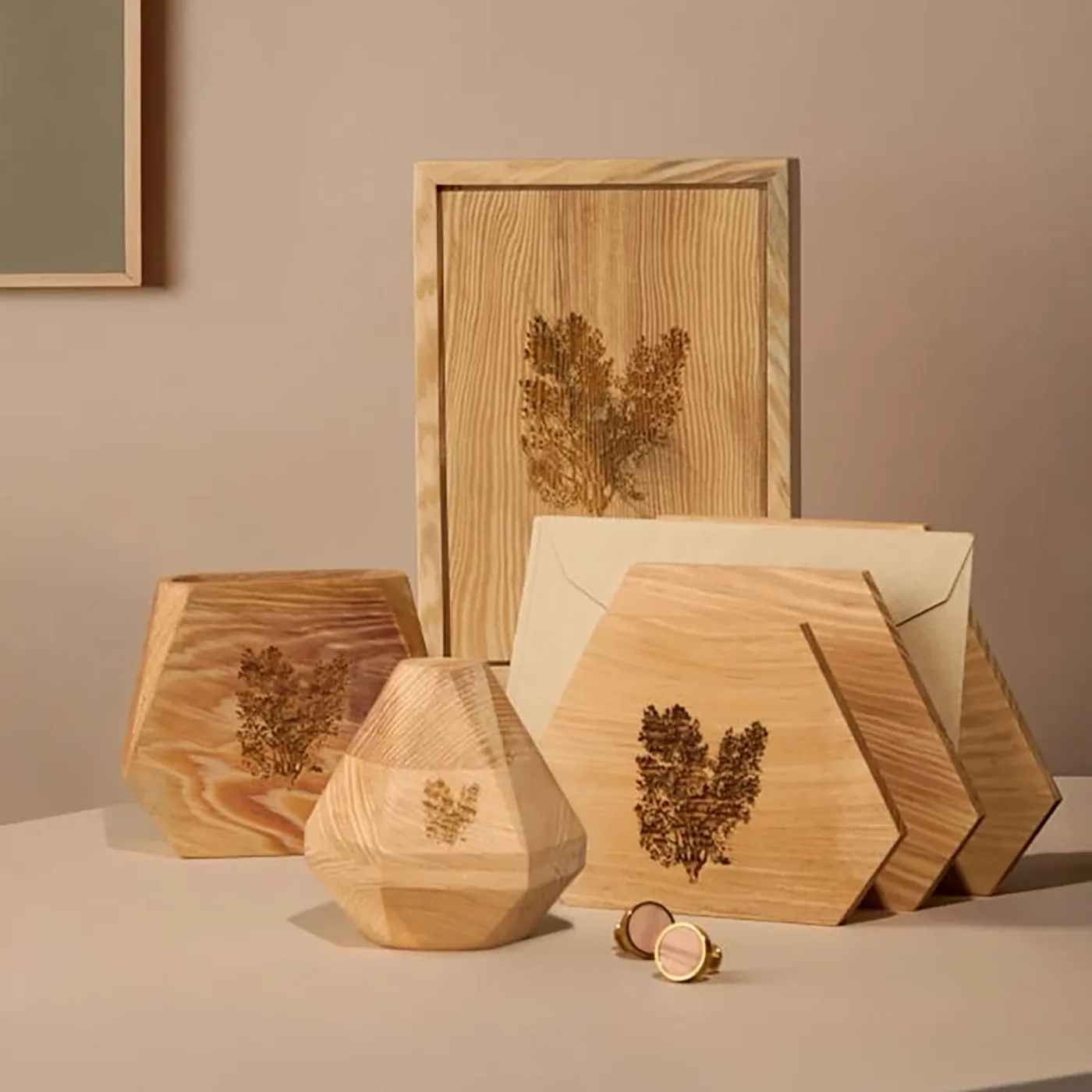
Black Pine Collection
Letter racks for Oxford Botanic Garden
The Oxford Botanic Garden's black pine had been growing since the 1830s. Tolkien named it Laocoon and made a habit of sitting beneath it; the furrowed bark and dense crown branching are considered to have given him the Ents. The last photograph taken of him, in August 1973, shows him standing beside it. Philip Pullman gave the tree a different afterlife: the bench at the end of The Amber Spyglass, where Lyra and Will promise to return each year, is understood to be set beneath it.
The pine fell in 2014, and the timber was moved to a barn at the Arboretum at Nuneham Courtenay, a few miles from our workshop, where it stayed until the Garden was ready to work with it. They came to us to design and make an editioned piece for them to sell.
Nearly two centuries of slow growth had given the tree its own tensions, and working it showed that: twisted grain, resistant to getting flat, with a resin content heavy enough to gum up blades continuously, which meant stopping to clean tools every few minutes. The grain itself was extraordinary: wild streaks of grey and ochre through each board in patterns you don't get from grown-for-timber softwood.
We developed the form with the Garden: three compressed diamond shapes, angular in the art deco sense, with proportions that came partly from the widths of timber we had.
Each piece carries a motif by Stanley Donwood, the artist behind Radiohead's sleeve artwork, laser-etched into the surface and developed exclusively for the commission. The collection launched at the Oxford Botanic Garden Christmas Fair in December 2025.
Interested in a commission? Get in touch.