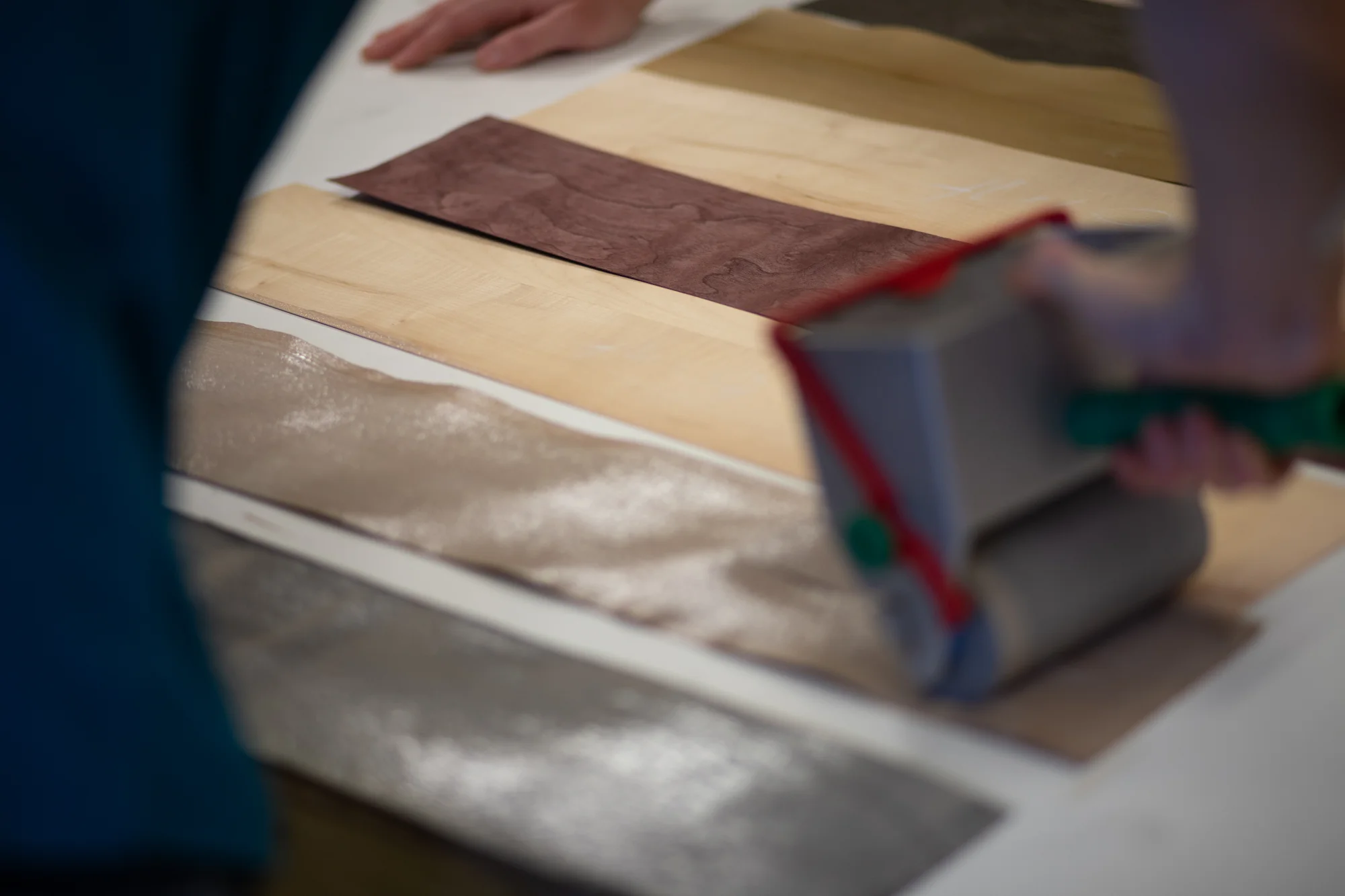
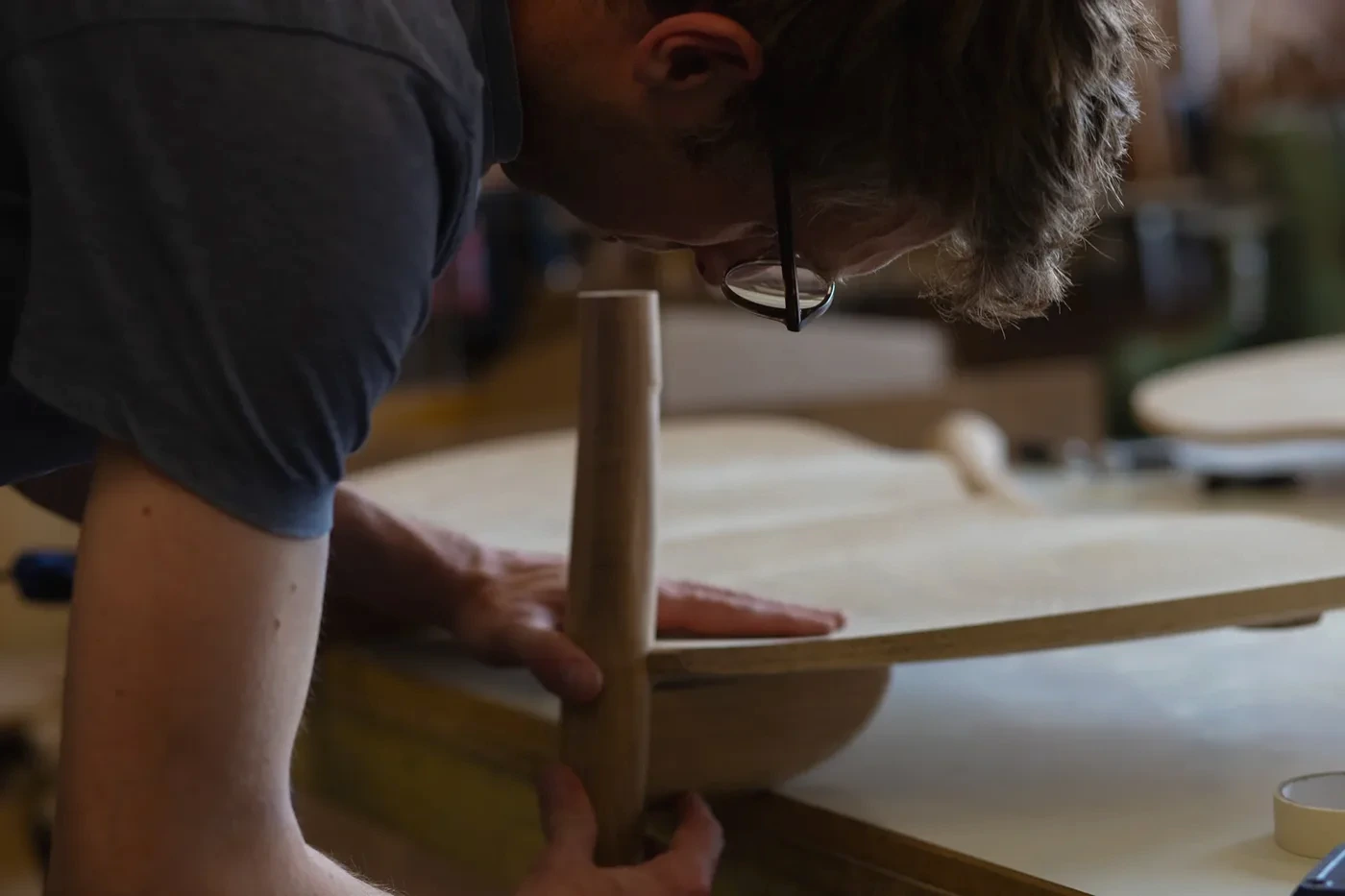
The idea of a 'service workshop', connected to the local population in the way a garage is, doing whatever practical work comes in, is Norman Potter's. He opened one with his friend George Philips in the Wiltshire town of Corsham in the early 1950s: farm gates and fences, shop fittings, plinths for the sculptor Barbara Hepworth. Potter had intended to keep one day a week for his own design interests and spend the rest on practical commissions. The division did not hold. He found instead that 'there was no longer a split between high-grade designing and low-grade bread and butter work: the two vigorously mingled and interacted. What the workshop actually did became less a matter of planned intention than of negotiated possibility.'
That observation is worth sitting with. The hierarchy between considered design work and everything else, between the commission that genuinely interests you and the one you take to keep the workshop running, is something most small makers implicitly accept. Potter found it false: not because all work is equally interesting, but because the interaction between different kinds of work is where development actually happens. The bread and butter job teaches something the carefully considered commission does not, and vice versa. Planned intention is where a workshop starts; negotiated possibility is where it ends up, and the distance between them is not a failure.
What is a Designer
Potter went on to teach at the Royal College of Art and later at the West of England College of Art in Bristol, where his influence on design education in Britain was considerable. What matters more for a working maker is the writing that came after: two books, both still in print.
What is a Designer, published in 1980, is a practical book. It covers drawing, client relationships, the organisation of a studio. It is not a manifesto, though it has positions. Potter's central argument is that design is an interpretive and consultative process: not an author imposing a vision on the material, but someone working between the client, the brief, and the constraints of the situation to find what the problem actually is before attempting to solve it. Stated plainly this seems obvious. With a commission that has begun to drift from its original brief, it is less obvious, and Potter's account of how that consultation works is among the more useful things in British design writing.
Models and Constructs, from 1990, is stranger and harder to categorise: a collection of lectures, letters, essays and poems, ranging across several decades of thinking. It is more personal than What is a Designer and more honest about the gap between the grand narratives of modern design and the reality of daily work in a small workshop. Potter is clear about the physical and emotional cost of that work, and clear too about where small workshops sit in the larger picture:
'I do believe the long-term effects of small creative happening tend to be underestimated. So does their spread. Networks are involved, as much as acorns and oak trees — though the seeds of ideas do seem somehow to get planted and to germinate.'
This is the most useful thing Potter says for a contemporary maker working out what a small workshop is actually for. The question of scale eventually confronts anyone running a furniture business outside the mainstream: the work is good, clients value it, but the operation is marginal by almost any conventional measure. Potter's answer, that marginal operations have underestimated effects, that the contribution is real even when it is not legible as market share or output, is not consolation. It is an argument about how change happens in a culture, and it has held up better than most of the more confident positions in British design writing of the period.
Potter died in 1995. What is a Designer has been through five editions. It still appears on reading lists, and the copies people acquire as students tend to stay on the shelf.