Most furniture gets thrown away eventually. The span varies: a piece of flat-pack might last five years, a well-made sofa thirty, a good piece of hardwood furniture longer still. But the trajectory is generally the same. Objects are acquired, used for a while, and eventually replaced. The furniture industry, like most industries, depends on this cycle continuing.
The interesting question is not how to make furniture that lasts technically. That problem is largely solved: traditional joinery, quality hardwood, an oil finish that can be renewed rather than stripped and reapplied. The question is what makes someone keep a piece for fifty years, pass it on, refuse to replace it even when it would be convenient to do so. That is not a question about quality. It is a question about attachment.
Jonathan Chapman, whose research on emotional durability has shaped much of the serious conversation in sustainable design over the past two decades, asked a deceptively simple question: why do people form emotional attachments to some objects and not others? The most consistent answer, across a wide range of users and object types, was narrative. Not aesthetics, not performance, not even sentimental associations with another person, though these play a part. The primary mechanism was the story of the object: when it was acquired, the circumstances of its making, the person who gave it, the memory it carries.
What Narrative Does
Chapman's finding has a specific implication for how objects are made. A piece can be of the highest technical quality and still be narratively empty: there is nothing to hold on to except its surface. Remove the novelty, and there is nothing left. Objects without story are, in the end, interchangeable, and interchangeable things are things that get replaced.
This is not a peripheral observation about consumer psychology. The majority of objects produced and sold in Britain are designed, implicitly or explicitly, to be interchangeable. Their materials are anonymous, their provenance untraced, their making invisible in the finished product. They are what they look like and what they do. When they cease to look or perform well enough, there is no reason to keep them.
The implication runs in the other direction as well. An object whose origins are legible in its making, whose material comes from a particular place, whose construction reflects a particular tradition, whose surface carries the evidence of how it was worked, carries something that will outlast its novelty and utility. It has something to say. It accumulates meaning as it ages rather than losing it.
The Narrative in the Material
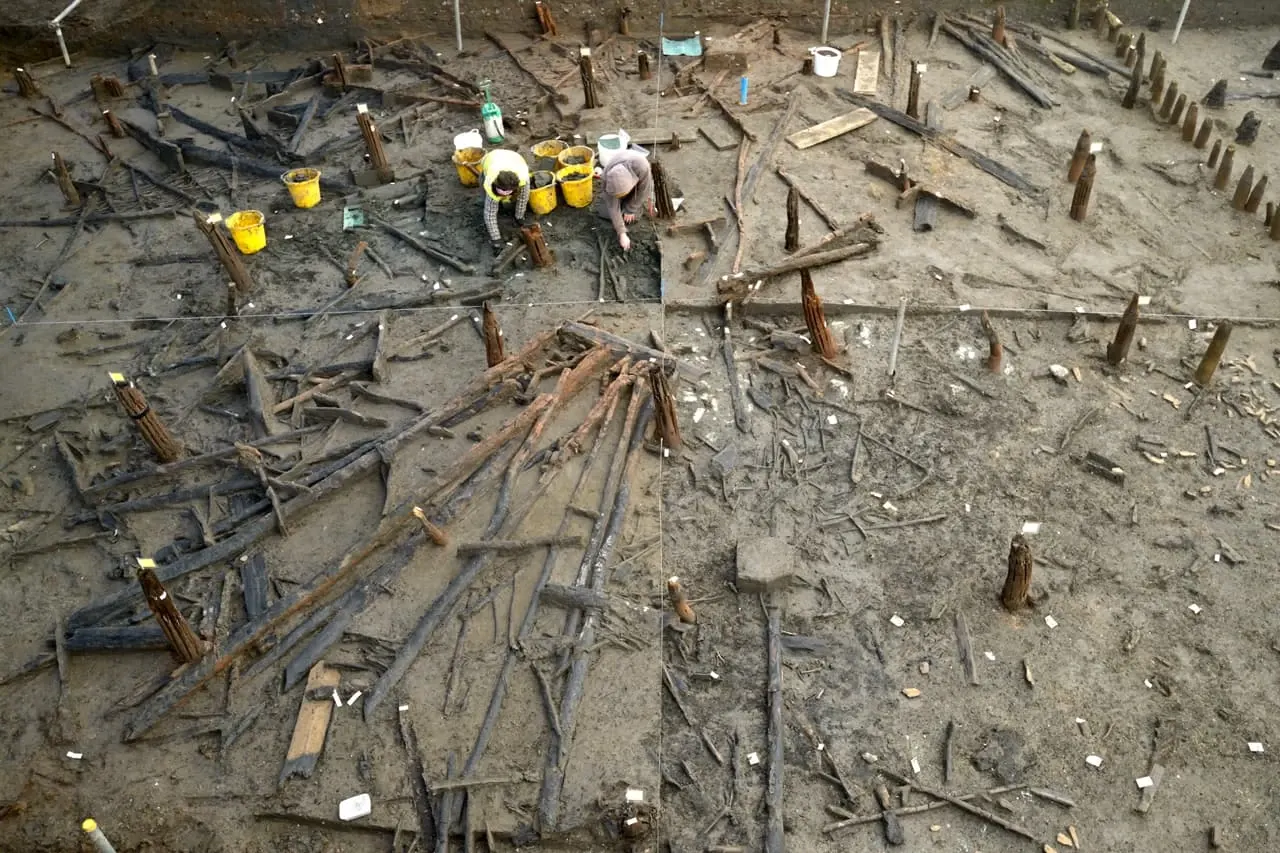
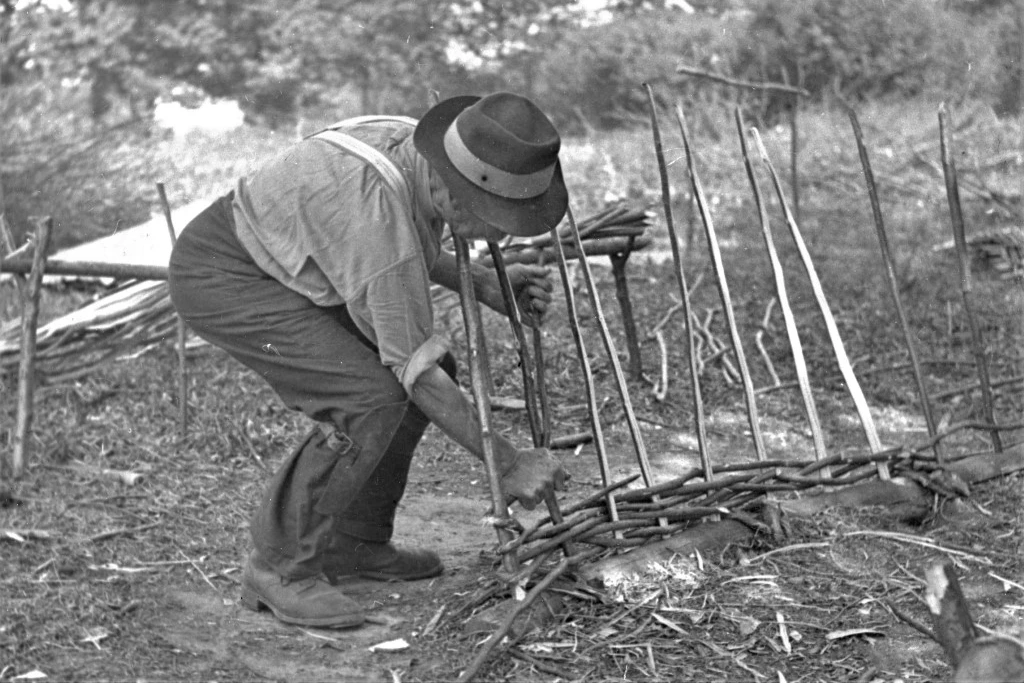
For most of British history, the objects that most consistently carried this kind of embedded narrative were also the most ordinary ones: the hurdle, the tool handle, the basket, the fence pole. They were made from coppiced woodland, and the narrative they carried was inseparable from the system that produced them. Oliver Rackham, writing about the managed woodlands of Britain, observed just how completely that system once pervaded everyday life:
"From neolithic times onwards, parts of the wildwood, instead of being grubbed out, were evidently turned into managed woodland. The twentieth century, conditioned to think in terms of timber, finds it difficult to grasp the immense importance of underwood in almost everyone's life in prehistory. Whole buildings are made of it… It was the normal material for road fences, vehicles and equipment, and the normal fuel for cooking, heating, metalwork and pottery."
The objects made from it were not preserved in the way that mahogany dressers were preserved. They wore out, were replaced, and left no permanent record. But they were embedded in a system of woodland management with roots reaching back to the Neolithic: a living relationship between maker, material, and land in which each object was a continuation of something rather than a departure from it.
What the collapse of the coppice economy severed was not only a supply chain. It severed the narrative that had always run through the objects made within it. Without the living system — the managed woodland, the cycle of cutting and regrowth, the craft skills passed between generations of workers who knew their wood and their woodlands — the objects ceased to carry meaning. They became material artefacts stripped of cultural context.
The Narrative Rebuilt
The relationship between maker, material, and land can be consciously rebuilt in contemporary practice. Not by attaching a provenance note to a finished object, but by making the narrative intrinsic: present in the choice of timber, visible in how it was worked, legible to anyone who looks carefully at what the piece is made from and how. Furniture whose timber came from identified British woodland, joined through methods whose logic shows in the result, finished in oil that builds in the grain rather than sealing it off, carries the beginning of a story that can continue. It is a different kind of object from one whose materials are anonymous and whose making is invisible in the finished surface. It has something to say. The longer it is kept, the more it has to say it.
Chapman's research suggests that this is what generates lasting attachment. Not the conscious recitation of a provenance story, but the quality of presence that objects carry when they have genuine origins: specific timber from a specific woodland, worked through a process whose logic is visible in the result. These are not interchangeable objects. They are not easily discarded. They are things worth keeping.
This is the thinking behind how we source timber and approach a commission.