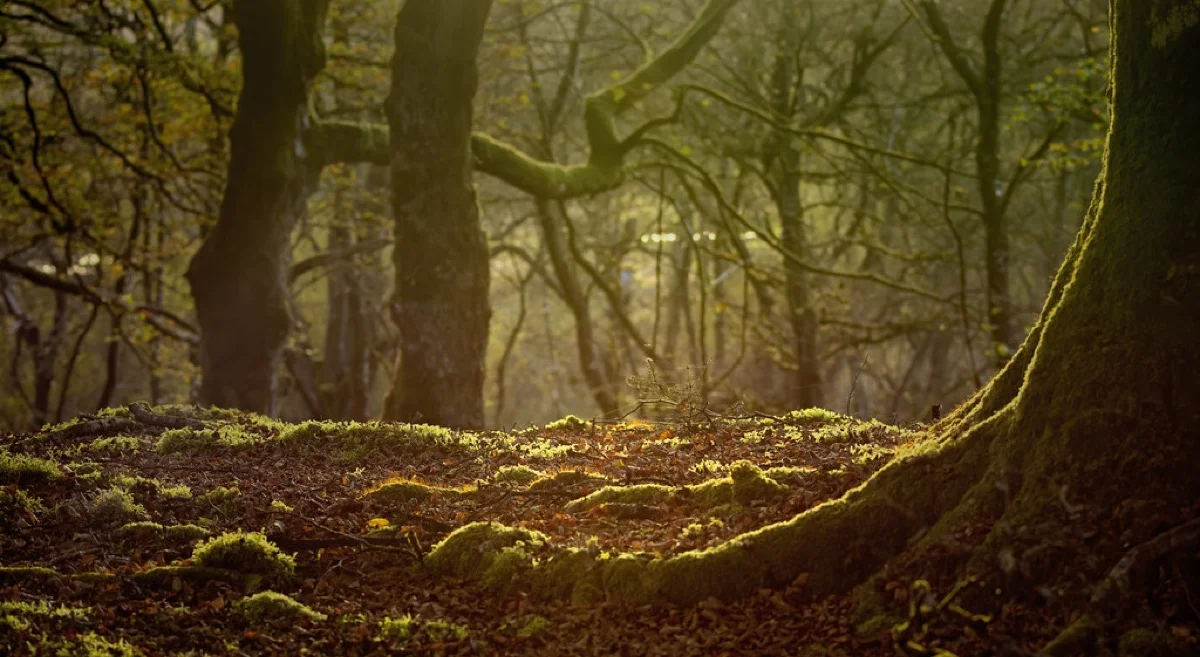
There is a forest in the English imagination that may never have existed. The greenwood of the old ballads: Sherwood, Arden, the wild wood beyond the city where different rules applied, is one of the most persistent landscapes in English cultural memory. It is a forest of freedom and transgression, where Robin Hood administered a supracultural justice, where lovers fled and were transformed, where the structures of ordinary society loosened their grip and something older and less governed took their place. Above all, it is a place set apart from human use. Not a resource but a refuge.
Simon Schama, in Landscape and Memory, argues that this kind of projection, the loading of landscapes with cultural meaning and psychological need, is not incidental to the history of how human beings have related to the natural world. It is the history. We have never encountered landscape neutrally, he contends. Every forest, mountain, and river in the human record is already a cultural object before it is a natural one: shaped by myth, memory, and the needs of the imagination as much as by ecology or geology. To understand how we behave toward a landscape, you first have to understand what we need it to mean.
The Forest in European Memory
The forest occupies a specific and recurring function in European cultural memory. It is the place beyond the boundary: beyond the city wall, beyond the farmland, beyond the reach of ordinary law. In this it is consistently the location of transformation. Dante begins his journey there. Shakespeare's comedies resolve themselves in it. The fairy tale places its trials and tests at the forest's edge and within its depths. The forest is where you go when ordinary life cannot contain what is happening to you.
This is not purely literary convention. The great forests of central Europe carried enormous ideological weight through the nineteenth and twentieth centuries, particularly in Germany, where the idea of the Wald — ancient, Teutonic, continuous — became central to a mythology of national identity with consequences that Schama traces with evident unease. The English version of the forest myth runs in a different direction. Where the German Wald represents rootedness and the deep persistence of a people, the English greenwood represents escape: freedom from authority, the outlaw as legitimate hero, the forest as a space where the social order can be temporarily and usefully undone. The emotional need being met is different, but the mechanism is the same. The forest is doing cultural work that has nothing to do with its ecology.
The English Greenwood
The ballad tradition runs from at least the thirteenth century, and its central figure — the outlaw in the forest, living by a more honest code than the one he fled — is among the most durable archetypes in English culture. What is notable about the greenwood in this tradition is what it represents: not a working landscape but an escape from one. The forest of the ballads is not coppiced or managed or productive. It is simply wild, and its wildness is the condition of its freedom. To manage it, to put it to use, would be to domesticate it, and in doing so to destroy the thing that makes it valuable as a cultural space.
This mythology has shaped British attitudes to woodland in ways that are rarely examined directly. The instinct to value the forest as something set apart from use, to be entered and experienced but not worked, has roots in a cultural tradition that is centuries old. It has consistently associated the unmanaged forest with freedom, authenticity, and a moral simplicity unavailable in the managed and productive world beyond its edge. The wood left alone feels, culturally, like a wood being respected. The wood being coppiced and thinned feels, by the same logic, like a wood being exploited.
What the Forest Actually Was
The difficulty is that the forest of the greenwood ballads was already managed. Sherwood Forest was a Royal Forest, which meant precisely the opposite of what the word suggests today: a landscape of regulated use, controlled hunting rights, and carefully enforced legal boundaries. The wildwood, the genuinely unmanaged forest of pre-human Britain, had been largely cleared by 500 BC, as Oliver Rackham established across decades of careful historical ecology. What remained was secondary woodland, the product of regeneration on land that had already been farmed and cleared and sometimes farmed again. The greenwood was never wild in any ecological sense. Its wildness was a cultural projection onto a thoroughly managed landscape.
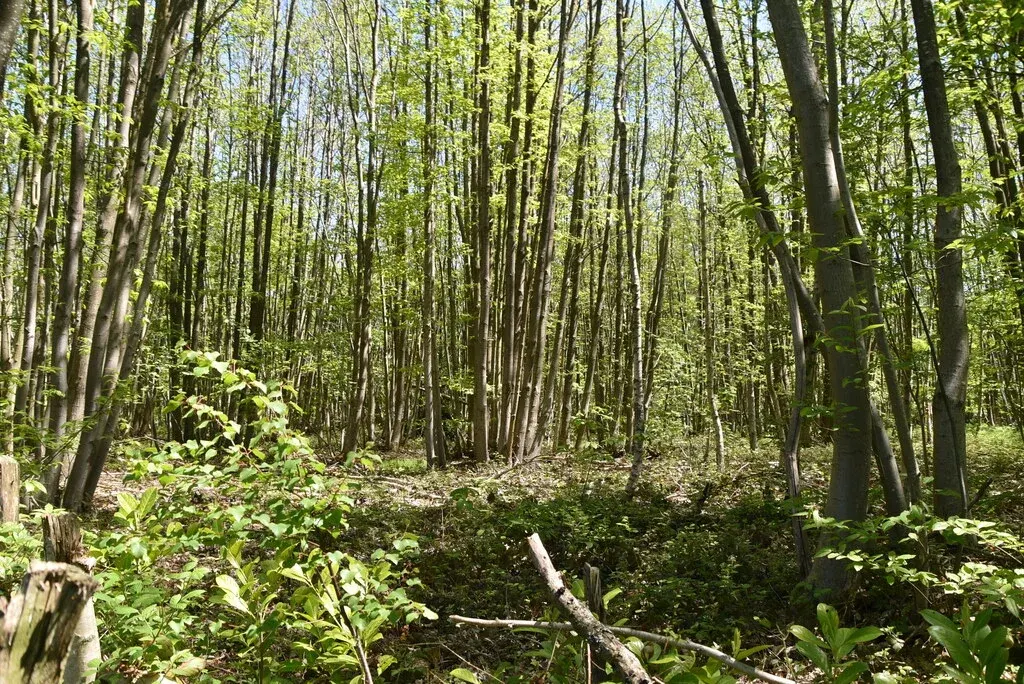
More than this: the woods that have proven most ecologically valuable, the ancient coppiced woods where primroses and wood anemones flower in early spring, where fritillaries emerge in May, where declining woodland birds find the structural variation they need, are the woods that were most intensively managed. Their biodiversity is not a product of being left alone. It is the direct product of centuries of regular cutting, of light reaching the woodland floor on a seven-to-ten-year rotation, of the structural complexity that only active management creates and that neglect erodes.
The national survey data make this concrete. Only 7% of native British woodland is currently in good ecological condition, and the defining characteristic of the rest is structural uniformity: the signature of decades without active management. A closed-canopy wood in which every tree is the same age supports a fraction of the species that a managed equivalent would hold. The wildlife of the English forest is the wildlife of the worked forest, not the neglected one.
The Myth's Consequence
The greenwood myth has not caused woodland neglect on its own. The economic causes are real and primary: the collapse of markets for coppice products through the twentieth century, the disappearance of the trades that made management viable, the availability of cheaper imported timber that removed the financial incentive to manage what we had. These are the forces that have left 700,000 hectares of British woodland under-managed according to the Sylva Foundation's estimates.
But the cultural mythology has made it easier to mistake neglect for virtue. A wood left alone looks, from a distance, as if something has been preserved. The argument for leaving it alone feels continuous with a much older argument for protecting the forest as a place apart from human use. What the greenwood myth provides is a ready-made moral framework in which management is interference and abandonment is respect.
Rackham spent much of his career arguing against this framework. His position, developed across decades of fieldwork and historical research, was that Britain's woodland is not a natural landscape but a managed cultural one, and that its ecological character is a product of that management, not a survival despite it. A wood left alone does not return to some prior natural state. It produces structural uniformity and ecological impoverishment: the closed canopy, the single age class, the silent floor where bluebells once grew.
To genuinely value British woodland requires setting aside a myth that is genuinely embedded in English culture. The forest was never simply wild. Its apparent wildness was always, to a significant degree, a projection. What has always been real is the making: the cycle of cutting and regrowth, the light reaching the floor, the relationship between woodland and the people who worked it that maintained both over centuries.
The greenwood was a beautiful idea. The managed wood is the real one.
Sources and further reading
- Landscape and Memory (1995). Simon Schama. HarperCollins
- Trees and Woodland in the British Landscape (1976, revised 1990). Oliver Rackham. Weidenfeld & Nicolson
- State of the UK's Woods and Trees 2025. Woodland Trust
- Forestry Statistics 2024. Forest Research