Britain looks like a green country. From a train window, from a hillside, from almost anywhere outside a city, the landscape reads as well-wooded, softened by hedgerows and pockets of woodland that give the impression of a country comfortable with trees. That impression is wrong. Britain covers barely 13.5% of its land area with trees, according to Forest Research's Forestry Statistics 2024, placing it among the least forested countries in Europe, comparable to Denmark and the Netherlands and far below the European Union average of 38%. England covers only 10%.
The nadir is more recent than most people imagine. Lloyd George reportedly told Parliament that Britain had come closer to losing the war for want of timber than for anything else. By 1919, following a century of agricultural expansion and then the emergency wartime felling of whatever timber remained accessible, forest cover had fallen to under 5% of Britain's land area. The remark served as the immediate political justification for establishing the Forestry Commission that year, charged with rebuilding a strategic state timber reserve that the country had discovered, at considerable cost, it did not have.
The century since has seen significant recovery, though recovery of a particular kind. We now have more trees, but our ancient woodland, the genuinely semi-natural woodland that has been continuously wooded since before 1600, covers only 2.5% of the UK. According to the Woodland Trust's State of UK's Woods and Trees 2025, up to 70% of ancient woods have been lost or damaged through conifer plantation conversion, overgrazing, and invasive species. Only 7% of native British woodland is currently in good ecological condition.
The recovery, in short, has largely been one of area rather than quality.
The Management Crisis
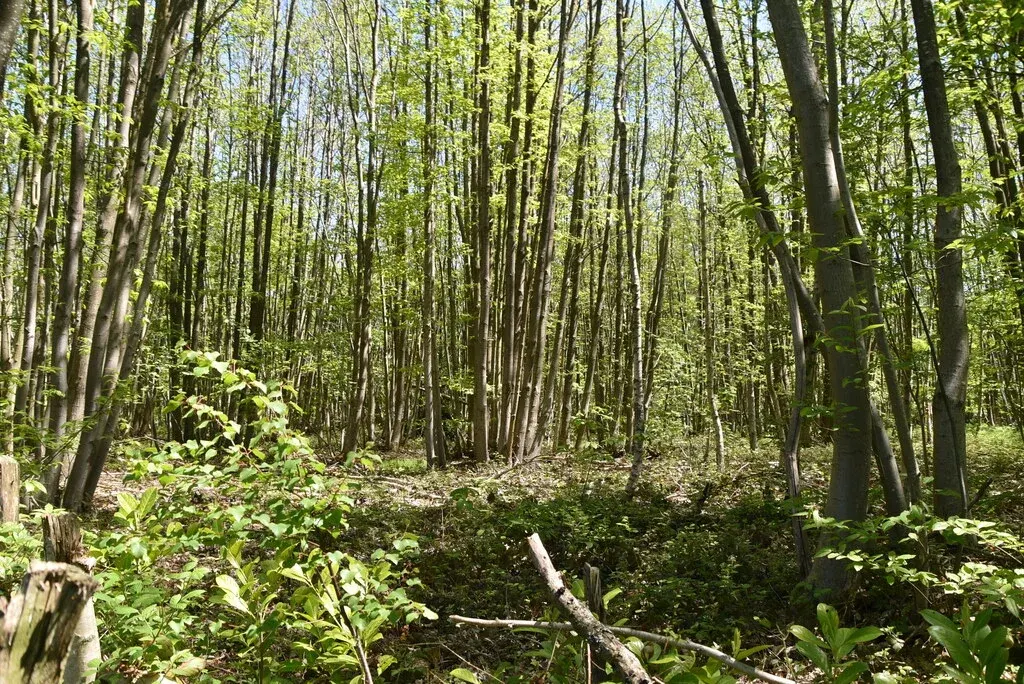
The distinction between tree cover and woodland quality is one the forestry establishment has been working to communicate for decades with limited public traction. Part of the difficulty is that it cuts against a popular assumption, reinforced by some strands of the rewilding movement, that the primary ecological intervention is human withdrawal: that a wood left alone will find its way back to something richer. Oliver Rackham, whose Trees and Woodland in the British Landscape remains the foundational text on British woodland history, spent his career demonstrating the opposite. Britain's woodland has been managed, coppiced, and cut for millennia; its ecological character is a product of that history of use, not a survival despite it. A wood left alone does not return to some prior natural state. It produces a closed canopy, structural uniformity, and ecological impoverishment, which is precisely what the current survey data document across the majority of British woodland.
The Royal Forestry Society has calculated that 71% of private woodland in England has no Forestry Commission-approved management plan. The Woodland Trust's 2025 survey found that 80% of native British woodlands have only two or fewer age classes, a direct result of decades without active management. A wood with a single age class is a wood in which every tree was established at roughly the same time: structurally uniform, ecologically impoverished, and supporting a fraction of the species that an actively managed equivalent would hold.
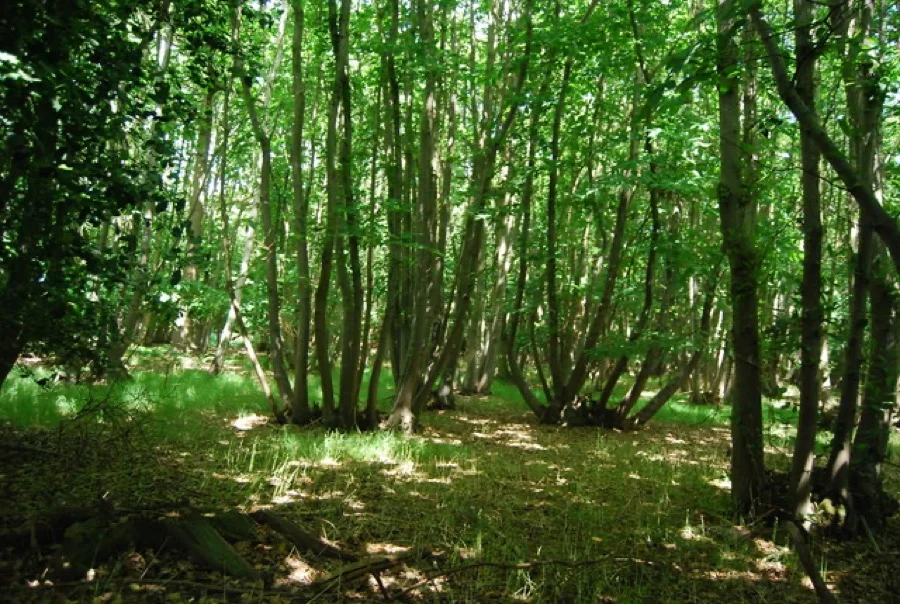
The form of management most closely associated with high-quality British broadleaved woodland is coppicing: cutting trees at or near the base to stimulate vigorous regrowth from the stump. It is one of the oldest documented woodland practices in Britain and one of the most effective known tools for maintaining biodiversity, because it creates the one thing a neglected, closed-canopy wood cannot provide: light reaching the woodland floor. Hazel is typically managed on a seven to ten-year rotation, sweet chestnut at fifteen to twenty years, ash at similar intervals. The open sections support primroses, bluebells, and wood anemones that cannot survive under a closed canopy; the structural variation supports the pearl-bordered fritillary butterfly, several declining woodland bird species, and many invertebrates that have become scarce in unmanaged British woods.
The collapse of active management has a direct economic cause. The traditional markets for coppice products (hurdles, poles, charcoal, tool handles) largely disappeared through the twentieth century as cheaper alternatives arrived from imports and synthetic materials. Without a market for the product, there is no return on the labour of management. Without that return, most private woodland owners leave their woods alone. The Sylva Foundation estimates that around 700,000 hectares of British woodland is currently under-managed as a direct consequence of this broken economic link.
Rackham observed that trees outlive industries, intended users, and money itself: that over the timescale a tree takes to mature, economic predictions are overtaken by circumstance. The hybrid poplar plantations of the mid-twentieth century were grown specifically for the match industry, supplying companies like Bryant & May with the lightweight, fast-growing timber their matchsticks required. When lighters and cheaper imports made that industry unviable, the plantations became stranded assets, the industry gone and the trees still standing. It is a reminder that the economic case for any particular use of woodland will eventually weaken or disappear entirely. The case for active management cannot rest on a single market. It has to rest on the ecology.
The Organisations Doing the Work
Several organisations have been working on different parts of this problem with different approaches.
Sylva Foundation, established in 2009 by Dr Gabriel Hemery and the late Sir Martin Wood, works across research, education, and digital tools to revive Britain's wood culture. Its myForest platform provides free woodland management tools and Forestry Commission-compliant planning to over 10,000 users responsible for approximately 9% of all UK woodland area, addressing a specific barrier: many private woodland owners want to manage their woods but lack the technical knowledge and administrative capacity to produce compliant plans. Alongside this, the foundation runs the Wood School, which trains craftspeople in working with home-grown timber, and publishes the British Woodlands Survey.
Woodland Heritage, founded in 1994 by cabinet makers who wanted to improve how British trees were grown and harvested, operates from a more practical angle. It owns and manages demonstration woodlands, runs Whitney Sawmills in Herefordshire specialising in British hardwoods, and is a founding member of Action Oak, a multi-agency research initiative focused on the threats facing Britain's oak population. The charity's particular contribution is in demonstrating the full supply chain from woodland to workshop in a way that makes the economics of British hardwood legible.
The Royal Forestry Society, founded in 1882, runs the longest continuous programme of woodland field meetings in England, Wales, and Northern Ireland, up to 100 per year, and publishes the Quarterly Journal of Forestry. Its Forestry Sector Skills Plan 2025-2035, published this year, identifies the workforce and skills gap in British forestry as one of the binding constraints on the sector's capacity to recover. There are not enough trained foresters, woodland managers, and associated tradespeople to manage the woodland we already have, let alone to meet government targets for new planting.
The Economics of Using British Hardwood
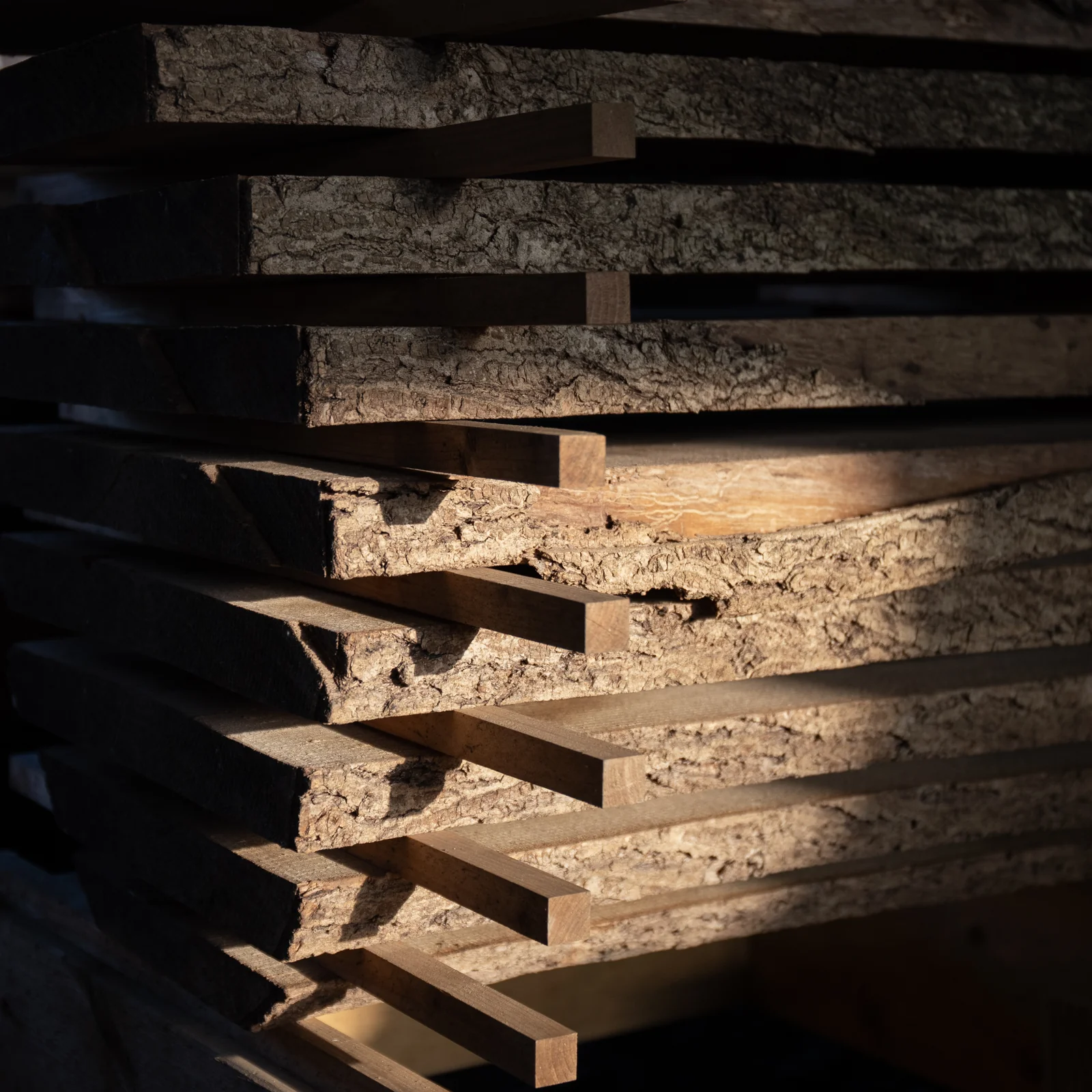
The UK imports approximately 80% of its wood, making it the world's second largest wood importer after China. Only 7% of the sawn hardwood consumed in Britain is home-grown, according to Forest Research. British furniture makers using American white oak or French walnut are not making an unusual choice; they are making the default one, because those timbers are cheaper, more consistently graded, and easier to source in quantity than their domestic equivalents.
The implications of that default run in two directions. Internationally, British demand for hardwood sustains forestry practices in America, West Africa, and elsewhere. Domestically, the absence of demand for British hardwood removes one of the few economic mechanisms that makes active woodland management viable for private owners. The feedback loop is simple: active management produces marketable timber; marketable timber finances active management. When that loop is broken, and it is broken across the majority of British woodland, the wood falls into the structural neglect documented in survey after survey.
The ONS Woodland Natural Capital Accounts 2024 estimated that non-timber ecosystem services from UK woodlands exceed the market value of timber by approximately 23 times: carbon sequestration, water regulation, biodiversity, and air quality provision together dwarf the commercial return from felling. These are the services that active management maintains and neglect erodes, and they are services not currently reflected in the price of imported hardwood.
Government planting targets have consistently been missed. The Parliamentary Environmental Audit Committee found in 2023 that England was meeting less than half its annual new woodland target, and the most recent figures, though the highest for over twenty years, remained well short of what was promised.
Using British-grown hardwood is not a sufficient condition for the recovery of British woodland. It is, however, a necessary one. The timber supply chain creates the economic conditions under which someone can profitably manage a wood. Without that, the ecological and carbon arguments for woodland remain compelling in the abstract and largely inert in practice. That is the clearest argument we can make for the choice of material, and it is the argument that informs where our timber comes from.
Sources and further reading
- Forestry Statistics 2024. Forest Research (Accredited Official Statistics)
- Forestry Facts and Figures 2024. Forest Research
- State of the UK's Woods and Trees 2025. Woodland Trust
- England Trees Action Plan 2021-2024. DEFRA / Forestry Commission
- Woodland Natural Capital Accounts UK 2024. Office for National Statistics
- Bringing Woodland into Management (2021). Royal Forestry Society
- Forestry Sector Skills Plan 2025-2035. Royal Forestry Society
- myForest. Sylva Foundation
- British Woodlands Survey 2024. Sylva Foundation
- Action Oak. Woodland Heritage
- Seeing the Wood for the Trees (2023). Parliamentary Environmental Audit Committee
- Trees and Woodland in the British Landscape (1976, revised 1990). Oliver Rackham. Weidenfeld & Nicolson