The Lapwing workshop is one of several independent makers at Long Wittenham, part of Sylva Foundation's business incubation programme for small timber-using businesses. Most furniture workshops are where they are for unremarkable reasons: a garage that was available, an industrial unit on the edge of town, a barn with enough headroom. The location usually means nothing beyond the work that happens in it. Sylva exists specifically to rebuild Britain's relationship with its own timber, and being embedded within that organisation shapes the work in ways that a unit on a trading estate would not.
What Sylva Does
Sylva's work covers several areas, all oriented toward the same problem: that Britain manages only a fraction of its woodland actively, imports around 80% of the timber it uses, and has largely broken the economic link between managed woodland and the markets that once made management viable. The myForest platform, used by over 10,000 woodland owners responsible for roughly 9% of all UK woodland area, provides free management planning and Forestry Commission-compliant guidance. The Wood School trains craftspeople in working with home-grown timber. The foundation publishes research on woodland economics, management practice, and the ecological condition of British woods.
Without craftspeople and furniture makers creating demand for home-grown material, the economic case for managing British woodland to produce good timber weakens from the demand side. The incubation programme for small timber-using businesses is, in part, a response to that: an attempt to build the market from within, by supporting the makers who depend on it.
The Mill and What It Produces
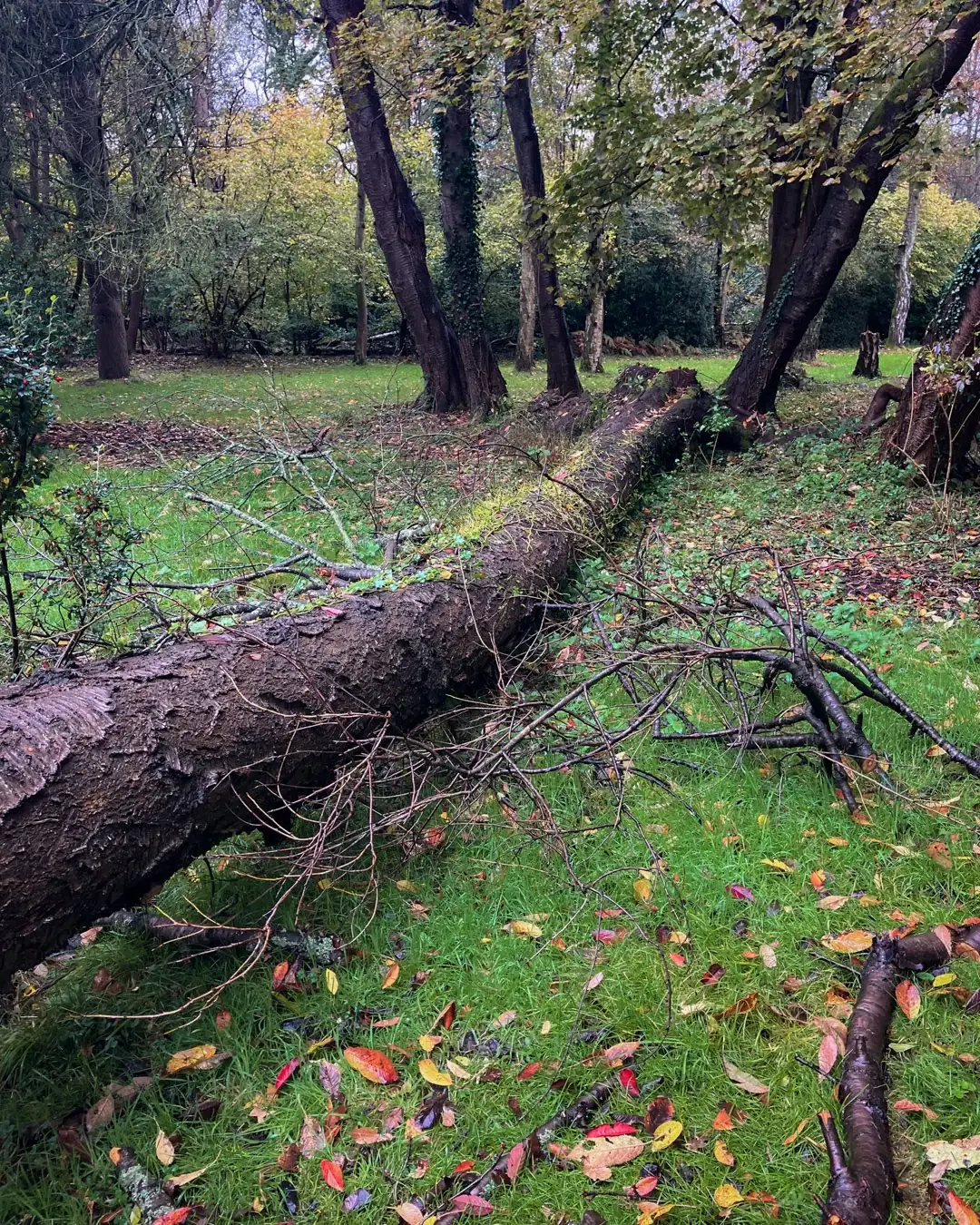
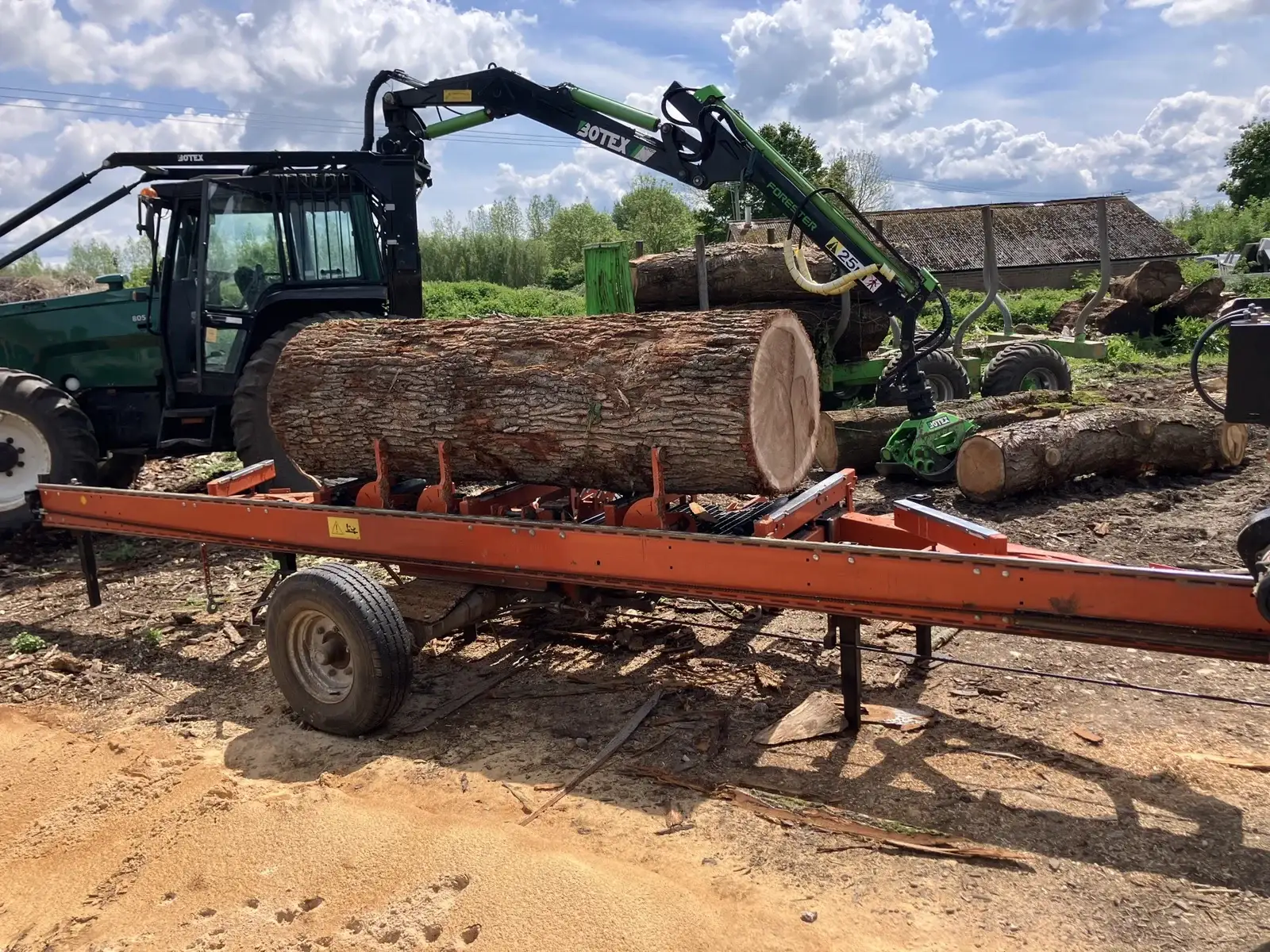
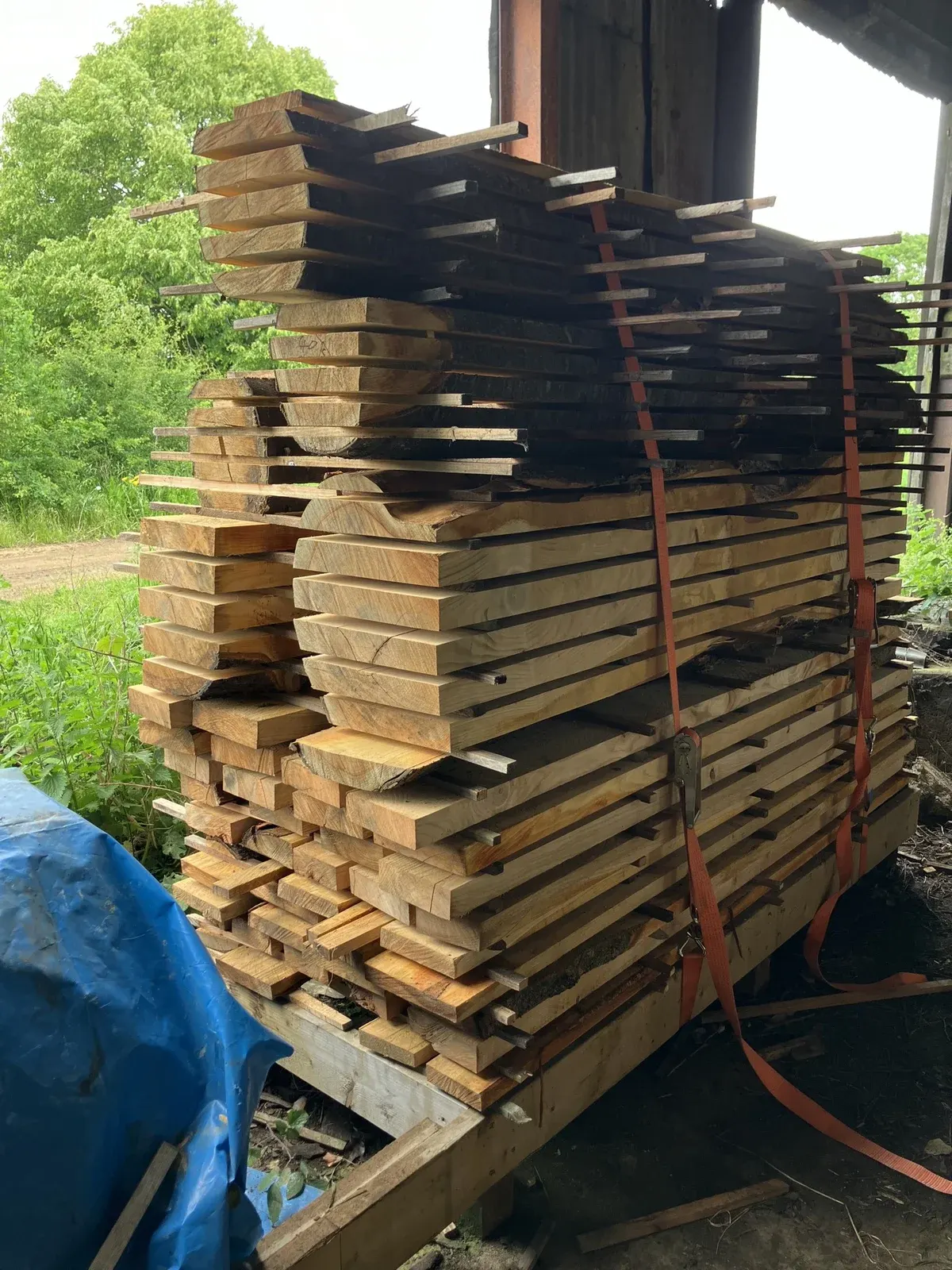
The timber running through the mill is mostly oak, which is what you would expect. A recent batch came about differently: someone approached the workshop about English cherry trees at the edge of Bagley Wood, a few miles south of Oxford, that needed to come down. The logs were felled and brought to the mill on site. Wild cherry — Prunus avium — is not a common furniture timber. The trees rarely grow large enough, and the species has never been planted at commercial forestry scale in Britain. But it is one of the most interesting timbers in the British canon: fine-grained, pink-red when freshly sawn, warming over years toward an amber that most people assume comes from something more exotic.
Being involved from the point the trees came down, rather than selecting material from a supplier's catalogue, is a different relationship with the timber. The provenance requires no construction: the trees were growing a few miles away, the logs were brought here, and the boards are drying a short walk from the bench.
The conversations that happen across the site about sourcing — about which species are available, which are becoming scarcer, which are worth paying attention to as conditions in British woodland change — feed directly into decisions in the workshop. All of it comes from people watching the supply chain at source.
Future Forest
Adjacent to the site is Future Forest, a research woodland planted by Sylva: an experimental mix of species chosen and managed to investigate which trees will perform well in British conditions as those conditions shift over the coming decades. It is a research project in the most literal sense. The trees are the question being asked. The answers will take decades to arrive.
Walking through it sits differently from reading the research that informs it. The discussions in this journal about ash dieback, about which species may become more or less viable as climate and disease reshape British woodland, take on a different quality when you can look at the experimental plantings where those questions are being tested on the same piece of ground.
Sylva's Wood School runs a Forestry for Woodworkers course on site, and doing it was useful in a way that is harder to convey than it sounds. Understanding what a woodland looks like when it is being managed well, what different species need in terms of growing space and rotation length, what makes a particular stand of timber viable as a source of furniture-quality material: these connections seem abstract when read about and become less so when you spend time in the field looking at them. It feeds back into the work. Not obviously, and not in ways that are legible in a finished piece, but in the kind of judgment calls that a maker makes constantly: about which species to use for what, about where good British hardwood is likely to come from in ten years, about what the supply of timber like that English cherry might look like once people know it exists.
Why the Location Matters
A piece of furniture made here from British hardwood sits within a system of people actively working on the supply chain it depends on. That connection, between a finished piece and the woodland it came from, is traceable rather than asserted: the people involved in producing the material are on the same site.
The case for using British timber rests partly on economics: workshops using home-grown hardwood are part of what keeps active woodland management financially viable. Without that demand, the argument for managing British woodland to produce furniture-quality material weakens from the market end. Sylva's incubation programme is an attempt to rebuild that demand from within the supply chain, and a workshop on this site is a small part of that effort.